Define the Exhaust Job First
Choose a tube axial exhaust fan from the job at the site. Do not start with a name or a free-air rating. State the air volume you need. State where air enters and leaves. State if the fan will move heat, moist air, normal process air, dust, or fumes. A tube axial exhaust fan may suit a direct air path with low resistance. It may not suit every duct system. The listed products give a starting point, but they do not prove that one model fits every job.
Give the supplier a short duty brief. Add the daily run time. Add the hot and cold site conditions. Add the air temperature at the fan. This helps when you select a tube axial exhaust fan for a drying room, workshop, or other work area. Use the actual site temperature, not just the main building temperature.
Map the Full Duct Route
A tube axial exhaust fan works with the duct route around it. A long duct, a sharp bend, a damper, a filter, a louver, or a hood can add resistance. These parts can change the air flow after the fan is installed. Draw the duct route before you ask for a tube axial exhaust fan quote. Show each part that is in the air path.
- Measure the duct diameter and total route length.
- Count each bend, branch, damper, filter, grille, and hood.
- State if the tube axial exhaust fan will supply air or remove air. This defines the tube axial exhaust fan duty.
- Share the airflow target and pressure data when you have it.
For a replacement job, send photos of the old fan, flange, duct joint, and nameplate. This can show the space and power limits. It does not mean the old tube axial exhaust fan was the right size. Review the tube axial exhaust fan system again before you order. A tube axial exhaust fan needs the right duct path as well as the right airflow. The system still needs review.
Check the Air and Site Conditions
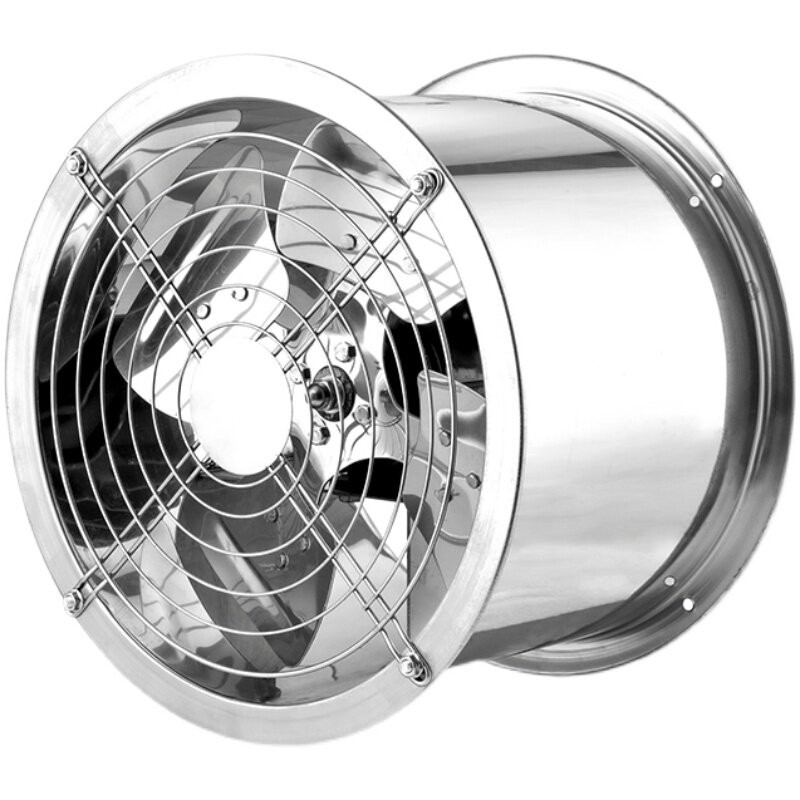
The air stream and the area around the fan affect material and motor choices. The 304 Stainless Steel Axial Fan 200°C for Drying Rooms is a listed product for drying-room use. Its product record states a 2,100 to 39,000 m³/h range, 220V or 380V options, and F-class or H-class insulation. Use these as product facts for that item only. Do not treat them as a standard spec for every tube axial exhaust fan.
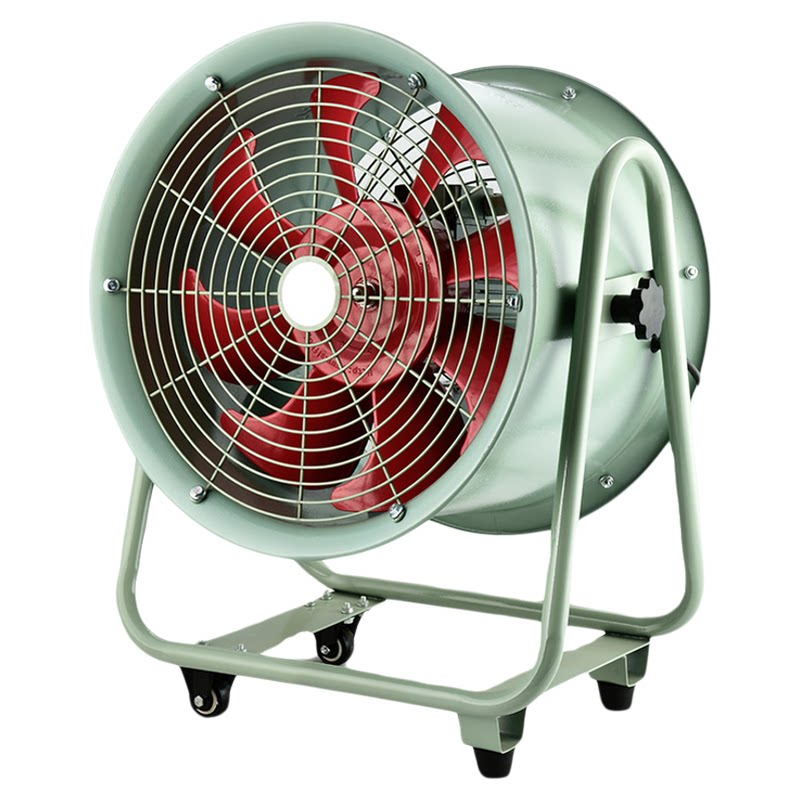
The Aluminum Blade Axial Fan 39,000 m³/h for Tobacco Curing is another listed axial product. Its record has SF-series models with different airflow ranges. The final model should follow the duty point. The Portable Axial Flow Fan 10,000 m³/h for Confined Spaces can connect to telescopic air ducts. It may suit a short-term job. A portable fan and a fixed tube axial exhaust fan meet different mounting needs.
Confirm Power and Mounting Details
Before you order a tube axial exhaust fan, confirm the voltage, phase, frequency, cable route, and control method. Also show the mounting direction, support frame, service space, inlet clearance, and outlet clearance. Ask about guards or flexible duct joints when they are needed. These details affect the final setup even if the airflow looks right.
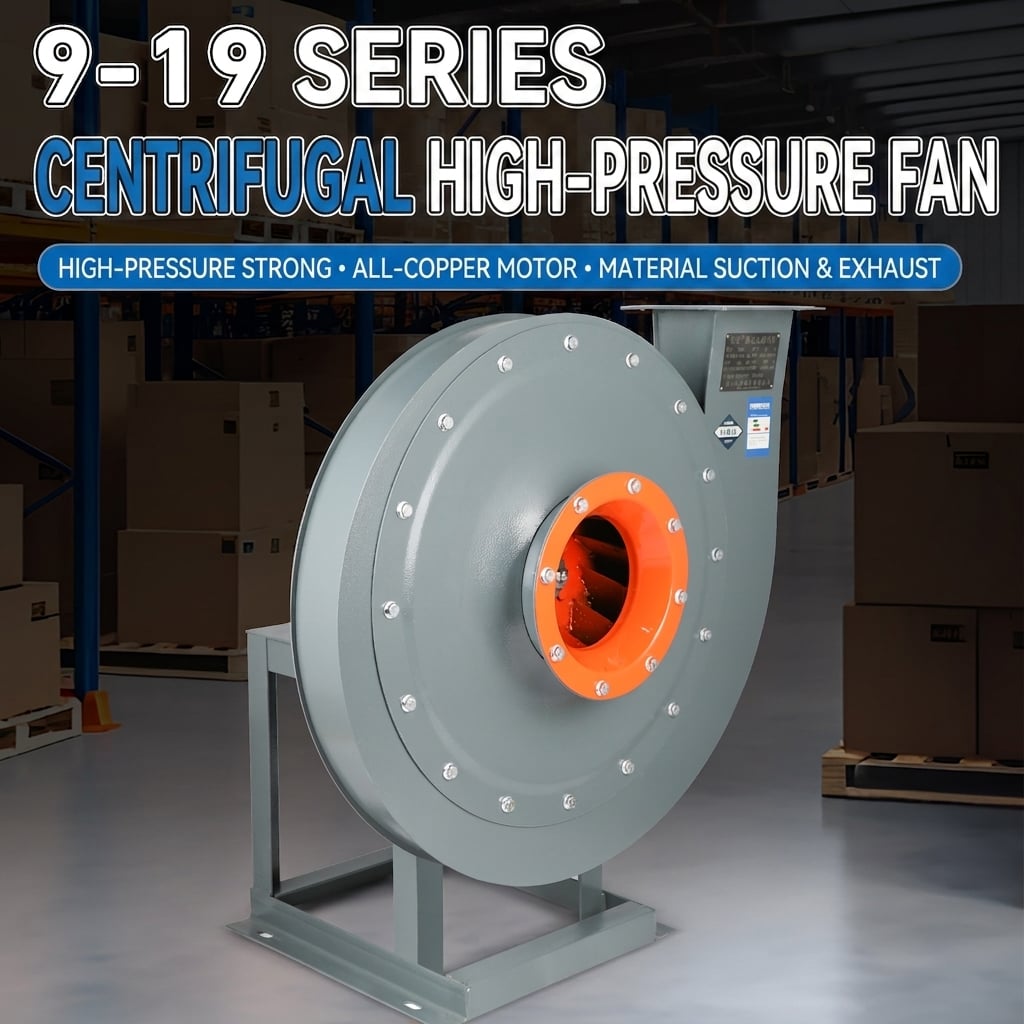
For an overseas inquiry, send a brief with the application, airflow, duct size, route, temperature, voltage, quantity, and photos or a drawing. This is more useful than a broad request for a tube axial exhaust fan. A tube axial exhaust fan request should name the air path and use conditions. The supplier can compare the real request with the stated axial, centrifugal, kitchen exhaust, and vortex blower range.
Choose by System Fit
Use a tube axial exhaust fan when the airflow path and resistance support an axial design. It can be considered for workshops, drying areas, equipment housings, and temporary ducted work. If the system has high resistance, another fan type may need review. This is a system question, not a label question. A tube axial exhaust fan should be checked as part of the full route. A clear check can reduce the chance of choosing a tube axial exhaust fan that looks right on paper but does not fit the installed duct.
Send the duty data before you ask for pricing. Include target airflow, pressure if known, duct size and route, air temperature, material needs, power supply, and mounting details. This makes the tube axial exhaust fan discussion more useful and helps avoid an untested model assumption.

 EN