Building Exhaust Fan Selection Guide | Zicheng

Get a Free Quote

Our representative will contact you soon.
Email
Mobile/WhatsApp
Name
Company Name
Message
0/1000
Building Exhaust Fan Selection for Ducted Projects

Building Exhaust Fan Selection for Ducted Projects

A building exhaust fan must match the job, not just a headline airflow figure. The fan, duct route, discharge point, and site conditions all affect the duty. This page helps buyers review centrifugal and cabinet-style options for kitchen exhaust, service areas, and other ducted building work. Taizhou Zicheng Electromechanical Co., Ltd. makes axial fans, centrifugal fans, kitchen exhaust fans, and vortex blowers. The listed products are the closest current site options for a building exhaust fan discussion. Check airflow, static pressure, space, power supply, and the working environment before you select a model. Ask if the listed building exhaust fan options fit the site. Send the building use, duct plan, and target duty point through the inquiry form. The supplier can then discuss a suitable building exhaust fan configuration and provide a quote.
Get A Quote

Supplier Context for Building Ventilation

Manufacturer and product-range context for a building exhaust fan project.

Direct Manufacturing Context

The prepared merchant profile names Taizhou Zicheng Electromechanical Co., Ltd. as a manufacturer with direct production capability for its fan products. Buyers can use that direct route to discuss a building exhaust fan application and its key site details.

Multi-Type Fan Portfolio

The prepared variable library covers axial fan types, centrifugal types including CF-11 and 11-62, and PCF-series smoke exhaust fans. This gives a multi-zone project a starting set for comparing a building exhaust fan arrangement with one supplier.

Industrial Ventilation Focus

The merchant profile lists axial fans, centrifugal fans, kitchen exhaust fans, and vortex blowers as the company focus. This is a useful basis for discussing airflow, pressure, site conditions, and building exhaust fan fit.

Related products

Pressure Planning for Duct Runs

Pressure Planning for Duct Runs

The CF-11 record lists maximum airflow of 20,000 m³/h and maximum static pressure of 1,000 Pa. These values can start a building exhaust fan review. They do not replace a system calculation. Include bends, filters, dampers, duct length, and discharge conditions before selecting a model or motor size.

Define the Building Exhaust Fan Duty

Start a building exhaust fan project with the air that must leave the space. State the building zone, its use, and the source of heat, moisture, fumes, or other air that must be removed. Then set the needed airflow at the pickup point. A building exhaust fan is not chosen from room size alone. Equipment, occupancy, work hours, and local rules can change the plan.

For a replacement, record the old model, its location, and the issue seen on site. Note any changes to the duct system. This helps avoid a like-for-like building exhaust fan replacement when the system duty has changed. For a new project, use the mechanical drawing or a measured duty point as the first input.

Check Duct Resistance

A building exhaust fan can deliver less air after installation than its free-air rating suggests. Ducts and fittings add resistance. Elbows, transitions, grilles, dampers, filters, and outlets all affect the result. Long runs and tight ceiling routes often have more fittings than expected. Put static pressure beside airflow in the building exhaust fan selection brief.

  • Measure the full duct route, not only the direct distance to the outlet.
  • List filters, grease equipment, dampers, and other parts that add resistance.
  • Check whether the building exhaust fan duty changes across shifts or zones.
  • Plan safe access for inspection and cleaning before the unit is fixed in place.

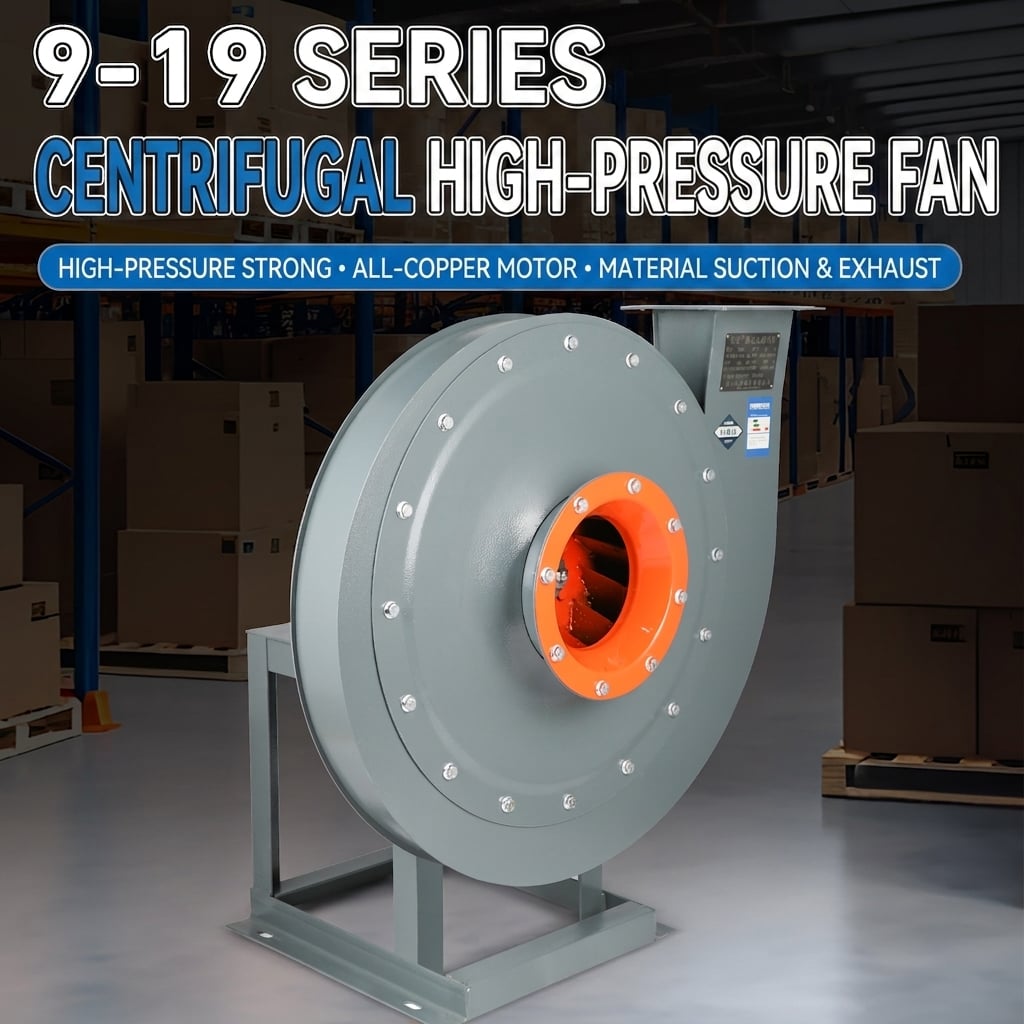
A centrifugal building exhaust fan may suit a ducted system that needs pressure capability. The final choice still depends on the calculated duty point and the product curve. The CF-11 and 11-62 records provide current centrifugal options for discussion. The cabinet smoke exhaust product is a published kitchen-use option. It is not a universal building exhaust fan choice.

Match the Unit to the Layout

There is no single building exhaust fan for every layout. A plant room, ceiling void, roof route, and kitchen duct can each set different limits. Check the mounting point, duct connection, service space, and power supply. Also check how the unit will be controlled. A building exhaust fan must fit the building plan as well as the air duty.

The three listed products are a limited, traceable starting set. The 11-62 Low-Noise Centrifugal Fan 65 dB for Hotel Kitchens and the CF-11 Multi-Wing Centrifugal Fan 20,000 m³/h for Kitchen Use are published centrifugal products. The Cabinet Smoke Exhaust Fan IP65 1,000 Pa for Kitchen Use is a published cabinet-style product. Product titles show current catalog use. They do not prove building exhaust fan fit for every site.

Review the Site Conditions

Tell the supplier about air temperature, humidity, grease, dust, cleaning methods, and corrosive exposure. A general building exhaust fan duty and a kitchen duty may have very different conditions. The cabinet product record lists an IP65 motor rating and high-temperature coils and ball bearings. Check those facts against the real site and the project specification. Do not rely on a title alone.

Access also matters. Leave room to check the impeller area, electrical connection, support, and duct joint. A building exhaust fan can be hard to maintain if the layout blocks safe access. Ask the project team to review the access path before installation.

Send a Useful Inquiry

A clear building exhaust fan inquiry includes the application, airflow, estimated static pressure, duct route, connection size, location, power supply, and site conditions. Add drawings or photos when they are available. This helps determine whether one listed building exhaust fan is a suitable starting point or whether another type should be discussed. Request product documents and confirm final specifications before purchase or installation.

Building Exhaust Fan FAQ

Questions for planning a ducted building exhaust fan system.

How do I size a building exhaust fan?

Set the required airflow for the zone and calculate resistance across the whole duct system. Gather duct size, length, bends, filters, dampers, grilles, and discharge details. Then compare airflow and static pressure with product data. A building exhaust fan should match both values, not only the largest airflow number. For a regulated project, the responsible mechanical or building-services professional should confirm the final selection.
A centrifugal building exhaust fan may be relevant when the duct path has resistance that affects selection. Long ducts, bends, transitions, filters, and restricted outlets can change the required duty. Compare the calculated airflow and static pressure with the applicable product data. Do not assume a centrifugal building exhaust fan is right for every project. The whole installation should be reviewed first.
Send the application, target airflow, estimated static pressure, duct layout, connection size, installation location, power supply, and working conditions. State whether the building exhaust fan will handle kitchen air, moisture, dust, heat, or another special condition. Drawings and photos can show routing and access limits. This gives the supplier better information for a building exhaust fan discussion than a room size or keyword alone.
No. A kitchen product title does not make a building exhaust fan suitable for every zone. Kitchen air may involve grease, heat, moisture, and a specific duct layout. Other spaces can have different needs. Review product documents, site conditions, mounting method, and system duty. Confirm the final building exhaust fan selection with the project team before purchase and installation.

Related article

How to Choose a Reliable Centrifugal Fan Manufacturer in China (2026 Buyer's Guide)

14

Sep

How to Choose a Reliable Centrifugal Fan Manufacturer in China (2026 Buyer's Guide)

A practical 2026 buyer's guide to choosing a trustworthy centrifugal fan manufacturer: certifications, quality control, SS304 materials, OEM support, MOQ and delivery.
View More
How to Choose the Right Aquaculture Aerator for Your Fish Farm (2026 Buying Guide)

14

Sep

How to Choose the Right Aquaculture Aerator for Your Fish Farm (2026 Buying Guide)

Paddle wheel, impeller or vortex? Learn how to size a pond aerator, cut energy costs and find a reliable aquaculture aerator manufacturer for your farm.
View More
Industrial Ventilation Fan Selection Guide: Axial vs Centrifugal vs Mixed Flow

14

Sep

Industrial Ventilation Fan Selection Guide: Axial vs Centrifugal vs Mixed Flow

Compare axial, centrifugal and mixed flow industrial ventilation fans by pressure, airflow and noise, and learn how to buy direct from a factory.
View More

Get a Free Quote

Our representative will contact you soon.
Email
Mobile/WhatsApp
Name
Company Name
Message
0/1000