Shutter Fan Selection for Industrial Ventilation

Get a Free Quote

Our representative will contact you soon.
Email
Mobile/WhatsApp
Name
Company Name
Message
0/1000
Shutter Fan Selection for Industrial Ventilation Projects

Shutter Fan Selection for Industrial Ventilation Projects

A shutter fan moves air through a wall opening. Its shutter can close the opening when the unit is off. This shutter fan guide helps contractors, farm builders, equipment integrators, and distributors plan a real installation. Check the opening size, airflow need, room heat, moisture, power supply, and air path first. A shutter fan needs a clear route for make-up air as well as a route for exhaust air. The current site range includes axial fans for drying spaces and portable axial flow fans for temporary work. These are the closest current products. They are not stated as dedicated shutter fan models. Taizhou Zicheng Electromechanical makes industrial ventilation equipment, including axial fans, centrifugal fans, kitchen exhaust fans, and vortex blowers. Send the application, dimensions, and operating conditions to discuss a suitable model and quotation.
Get A Quote

Industrial Ventilation Supplier Context

Relevant manufacturing and range information for a shutter fan project.

Direct Manufacturing Support

Taizhou Zicheng Electromechanical is identified in its merchant profile as a manufacturer, not a trading company. Buyers can discuss the intended shutter fan application with a supplier focused on industrial ventilation equipment.

Focused Fan Product Range

The stated range includes axial fans, centrifugal fans, kitchen exhaust fans, and vortex blowers. Buyers can compare fan type with airflow needs and system resistance for each ventilation zone.

Application-Based Selection

The site describes design, development, and production for ventilation equipment. Select a shutter fan from airflow, pressure, material needs, voltage, and the actual work environment, not from a keyword alone.

Related products

Start With the Air Path

Start With the Air Path

A shutter fan needs a clear wall opening, a make-up-air route, and a safe discharge route. The closest site products have axial-airflow uses. Their fit still depends on opening size, resistance, temperature, and duty. Check these facts before choosing a shutter fan model.

Set the Shutter Fan Duty

A shutter fan is often used in a wall opening. It can help move indoor air out of a workshop, farm building, or process area. The shutter fan search term does not define the full duty. First state what the shutter fan must do. It may remove heat. It may clear moisture. It may exhaust odor. It may support basic air exchange. Each job can need a different airflow level and run time.

Measure room length, width, and height. Note heat from people, motors, lights, or process work. Then find the make-up-air path. A shutter fan cannot keep steady exhaust flow if air cannot enter the room. Mark doors, louvers, windows, and inlets on a simple plan. Also show where the shutter fan will send exhaust air.

Check the Full Air Path

Many shutter fan projects have a short and open air path. In that case, axial airflow may be a useful starting point. But a shutter fan can face more resistance than expected. Screens, guards, shutters, weather hoods, elbows, filters, and long ducts all add resistance. Do not select a shutter fan by wall opening size alone.

  • Measure the clear wall opening for the shutter fan, not only the nominal fan size.
  • List each screen, guard, shutter, or hood in the shutter fan air path.
  • List duct length, bends, filters, and outlets when the shutter fan will not discharge directly outside.
  • Share target airflow and operating hours for the shutter fan with the supplier.

There is no one answer for every shutter fan installation. The best choice depends on open-area airflow and total system resistance. If long ducts or many parts restrict flow, ask for a static-pressure review before you assume an axial shutter fan will fit.

Match Product Facts to the Site

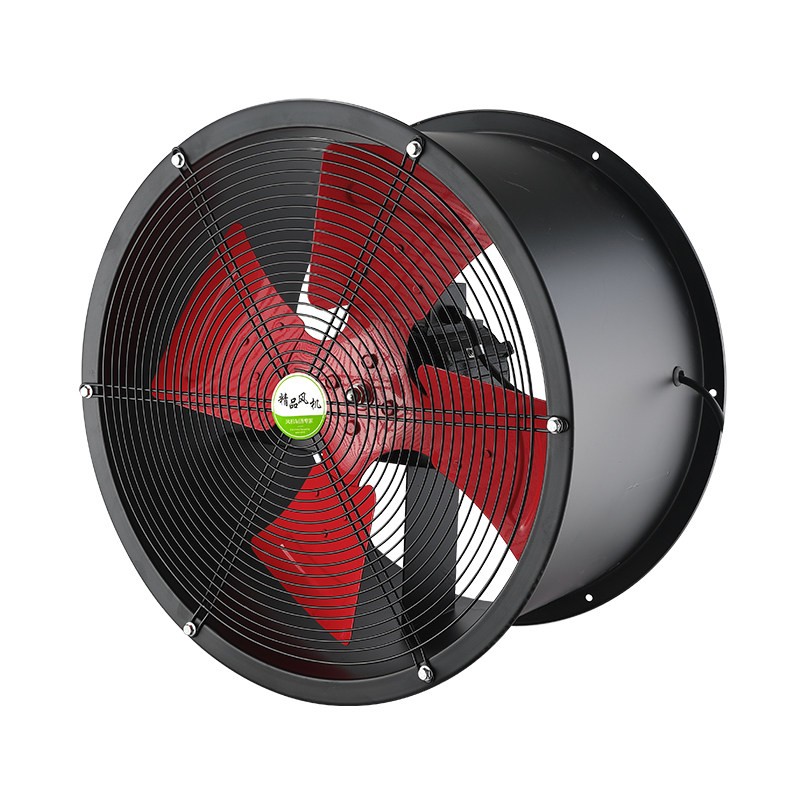
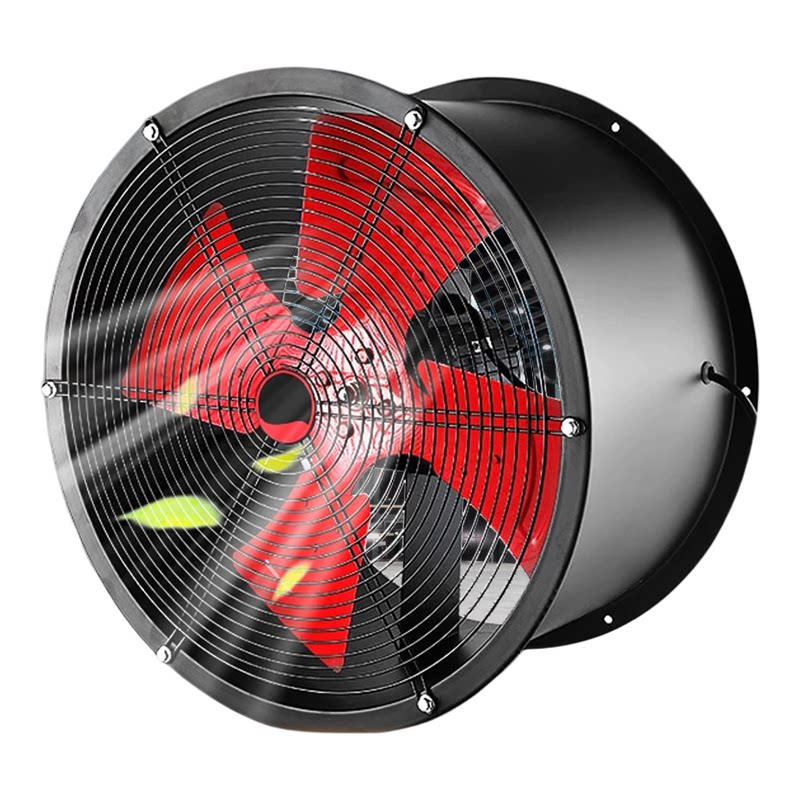
The listed products are axial-airflow references, not confirmed shutter fan models. Product 842 is a 304 stainless steel axial fan for drying rooms. Its record states a temperature capability up to 200°C. Use that fact only if the real shutter fan environment and the current product data match. Product 708 is an aluminum-blade axial fan for tobacco curing. Product 843 is a portable axial flow fan for confined spaces and telescopic ducts. A portable fan is not a substitute for a wall-mounted shutter fan.

For each shutter fan project, state ambient temperature, humidity, dust, corrosion exposure, and cleaning method. State the power supply too. Include voltage and frequency. Check mounting direction and weather exposure. The product page is a start. The final shutter fan choice must match the site conditions.

Plan the Wall Opening

Plan the shutter fan frame with the wall structure. Check that the opening can support the equipment. Seal around the frame without blocking moving shutter parts. Leave space to clean and inspect the shutter fan. If the building uses several units, place the shutter fan locations away from make-up-air inlets where possible. This helps avoid drawing discharged air back into the room.

Look at vibration, noise, wind, and rain. Use a firm mounting surface. Keep the discharge area clear. For an outside wall, note rain direction and wind. Ask whether the shutter fan installation needs a weather hood or other protection. These are site questions. They are not automatic features of every product.

Send a Useful Quote Request

A clear brief helps the supplier review a shutter fan request. Include the use, room size, wall opening, target airflow, resistance, power supply, environment, mounting point, quantity, and required material. Add photos or a simple drawing. If the listed products are only close to the required shutter fan design, say so. Ask if a closer current model is available. This keeps the quote tied to the real shutter fan project.

Shutter Fan Questions

Practical points to check before choosing a wall-mounted ventilation solution.

How do I size a shutter fan opening?

Start with the real ventilation duty. Then measure the room and the free area of the proposed opening. Heat, moisture, run time, and make-up air all affect shutter fan airflow. A nominal fan size is not enough. Screens, shutters, guards, and hoods may restrict the shutter fan air path. Send a drawing, opening size, target airflow, and use case to the supplier. This lets the supplier check the full shutter fan installation instead of selecting from a keyword or photo.
It depends on total system resistance. A shutter fan is often used where air has a short and open route. Long ducts, bends, filters, screens, and outlet parts add resistance. An axial shutter fan may fit a low-resistance route. A ducted system may need a review of pressure needs first. Provide the duct layout, component list, and target airflow. Do not assume shutter fan airflow in an open setting will match delivered airflow after installation.
The selected products are the closest current axial-fan products. Their records do not call them dedicated shutter fan models. Product 842 is for drying rooms. Product 708 is for tobacco curing. Product 843 is for confined spaces. They are axial-airflow references, not proof of shutter fan equivalence. Ask for a current shutter fan recommendation using the opening size, environment, airflow target, and installation facts.
Send the shutter fan application, room size, mounting point, wall-opening size, target airflow, duct resistance, voltage, frequency, ambient temperature, humidity, dust, corrosion exposure, quantity, and project schedule. Add a photo or drawing if possible. For replacement work, include the old shutter fan label and the reason for replacement. These details help match a shutter fan option to the actual duty.

Related article

How to Choose a Reliable Centrifugal Fan Manufacturer in China (2026 Buyer's Guide)

14

Sep

How to Choose a Reliable Centrifugal Fan Manufacturer in China (2026 Buyer's Guide)

A practical 2026 buyer's guide to choosing a trustworthy centrifugal fan manufacturer: certifications, quality control, SS304 materials, OEM support, MOQ and delivery.
View More
How to Choose the Right Aquaculture Aerator for Your Fish Farm (2026 Buying Guide)

14

Sep

How to Choose the Right Aquaculture Aerator for Your Fish Farm (2026 Buying Guide)

Paddle wheel, impeller or vortex? Learn how to size a pond aerator, cut energy costs and find a reliable aquaculture aerator manufacturer for your farm.
View More
Industrial Ventilation Fan Selection Guide: Axial vs Centrifugal vs Mixed Flow

14

Sep

Industrial Ventilation Fan Selection Guide: Axial vs Centrifugal vs Mixed Flow

Compare axial, centrifugal and mixed flow industrial ventilation fans by pressure, airflow and noise, and learn how to buy direct from a factory.
View More

Get a Free Quote

Our representative will contact you soon.
Email
Mobile/WhatsApp
Name
Company Name
Message
0/1000