Map the Air Path First
Choose a centrifugal extractor fan for the full air path. Do not choose by airflow alone. List the hood, inlet, duct size, straight runs, bends, branches, filters, dampers, and outlet. Each part adds resistance. A long route can change the working point. A dirty filter can do the same. If drawings are not complete, measure the old duct route before you compare a centrifugal extractor fan.
For a new system, mark each fitting on the plan. For a replacement, note what changed since the old fan was fitted. This simple record helps explain why an old unit may no longer meet the job.
Check Flow and Pressure Together
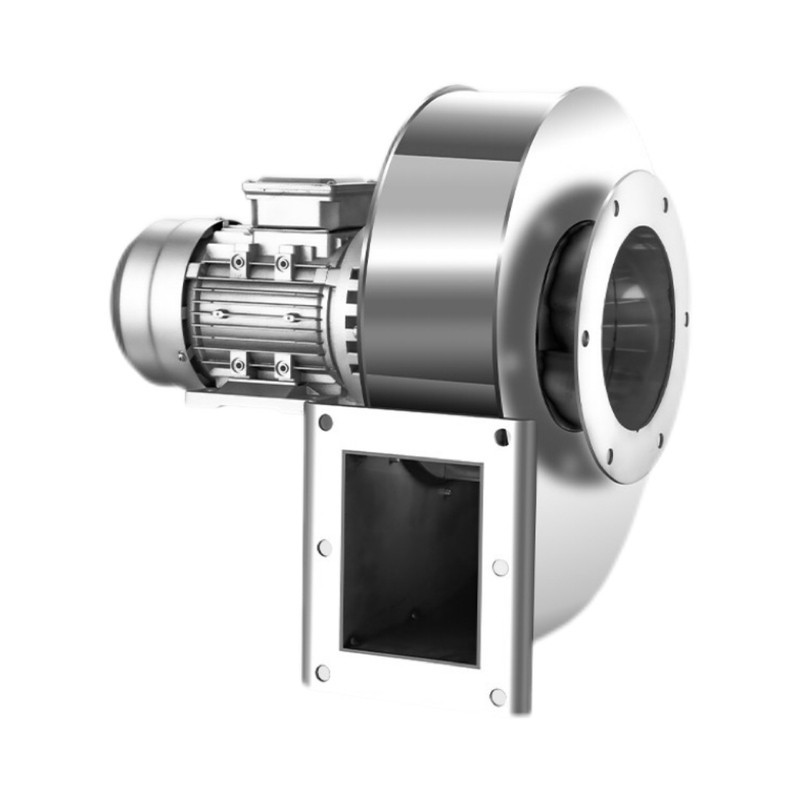
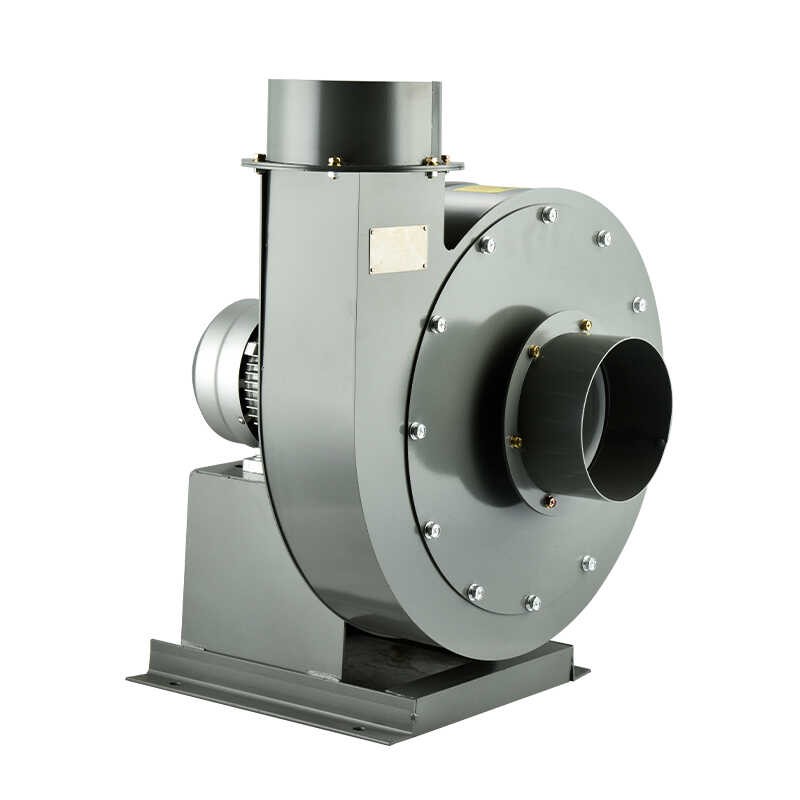
Airflow is the volume of air needed. Static pressure is the force needed to move it through resistance. A centrifugal extractor fan must meet both values at one duty point. The selected 4-72A products state pressure up to 2,500 Pa for general ventilation. The selected 9-19 and 9-26 products state pressure up to 9,200 Pa for high-pressure work. These values are limits, not a final selection.
- Use the flow and pressure from the same system calculation.
- Add losses from filters, bends, hoods, and terminal parts.
- Allow for changes such as filter loading or later duct work.
For short open exhaust routes, a high-pressure centrifugal extractor fan may add cost without solving a real need. For long routes with many fittings, pressure reserve may matter more. There is no single right model without the duty point. A centrifugal extractor fan works best when its curve fits that point.
Check the Air Stream
Check the gas and the place where the fan will work. The selected stainless 4-72A product is described with a 304 stainless-steel housing for chemical-related use. The selected carbon-steel 4-72A product is for gases that are non-self-igniting and non-corrosive to steel. Records for the listed 4-72A and high-pressure series state an 80°C maximum gas temperature and a 150 mg/m³ dust and hard-particle limit.
Measure inlet conditions during peak work. Do not rely only on a nominal process note. If the gas, heat, or particle load is outside the stated limits, ask for a different solution. A centrifugal extractor fan should match the real air stream, not a simplified description.
Plan Installation and Power
Confirm the inlet and outlet direction, fan support, service space, motor power, and local supply. The 4-72A records list A, B, C, and D structures. These can help with duct and drive layout. The high-pressure models list power options up to 30 kW. A higher-pressure centrifugal extractor fan can suit a hard duct route. It is not always best for a short route with low resistance.
Send a Clear Project Brief
Send the application, airflow, static pressure, gas temperature, dust or vapor details, voltage, frequency, duct drawing, and site location. For a replacement, send the old nameplate and photos. Taizhou Zicheng Electromechanical Co., Ltd. states that it makes axial fans, centrifugal fans, kitchen exhaust fans, and vortex blowers. This helps buyers compare fan types before they settle on a centrifugal extractor fan for the job. The more complete brief helps identify whether this centrifugal extractor fan type fits the system.

 EN