Welding Exhaust Fan Selection Guide | ZICHENG

Get a Free Quote

Our representative will contact you soon.
Email
Mobile/WhatsApp
Name
Company Name
Message
0/1000
Welding Exhaust Fan Selection for Industrial Work Areas

Welding Exhaust Fan Selection for Industrial Work Areas

A welding exhaust fan is selected from the air path, not a free-air rating alone. A welding exhaust fan may serve a local hood, a ducted collector, or a temporary work area, but the right setup depends on the fume source, hood position, duct route, filter resistance, and discharge plan. This page lists real portable axial and centrifugal fan options from Taizhou Zicheng Electromechanical Co., Ltd. A portable unit may fit a mobile task when compatible ducting supports the layout. A centrifugal welding exhaust fan may be worth reviewing when long ducts, bends, or collection equipment add resistance. Before choosing a welding exhaust fan, confirm needed airflow, static pressure, inlet temperature, particle load, power supply, and site safety rules. Send the work-area layout and system details to discuss a suitable fan type and request product information.
Get A Quote

Manufacturer Context for Fan Projects

Supplier context for industrial ventilation buyers.

Direct Fan Manufacturing

Taizhou Zicheng Electromechanical Co., Ltd. identifies itself as a maker that designs, develops, and produces axial fans, centrifugal fans, kitchen exhaust fans, and vortex blowers. This product-family context can help during supplier review.

Axial and Centrifugal Range

The available range includes axial and centrifugal fan types. Buyers can compare a portable air-moving setup with a centrifugal welding exhaust fan when the duct system calls for a pressure check.

Related products

Portable Ducted Air Movement

Portable Ducted Air Movement

The Portable Axial Flow Fan 10,000 m³/h for Confined Spaces is described as a mobile fan that can connect to telescopic air ducts. It can be reviewed as a welding exhaust fan option for temporary air movement where fixed ductwork is not in place. It does not replace a full fume-control review. Confirm the task, duct path, discharge point, and safety rules before selecting a welding exhaust fan.

Plan the Welding Exhaust Fan Air Path

A welding exhaust fan works as part of an air path. First, mark where the fume starts. Then mark where a hood or pickup can sit. Last, mark where the air will go. A welding exhaust fan needs this plan before a model is picked. The gap from the weld to the pickup matters. Fume can spread through the work area when the pickup is too far away.

List the number of welding stations, room size, work hours, and barriers near each station. Note if the job moves or stays in one spot. Also note heat, dust, or vapors from other work. This short list gives the system designer useful facts. It is better than choosing a welding exhaust fan by its largest listed airflow.

Match Airflow and Pressure

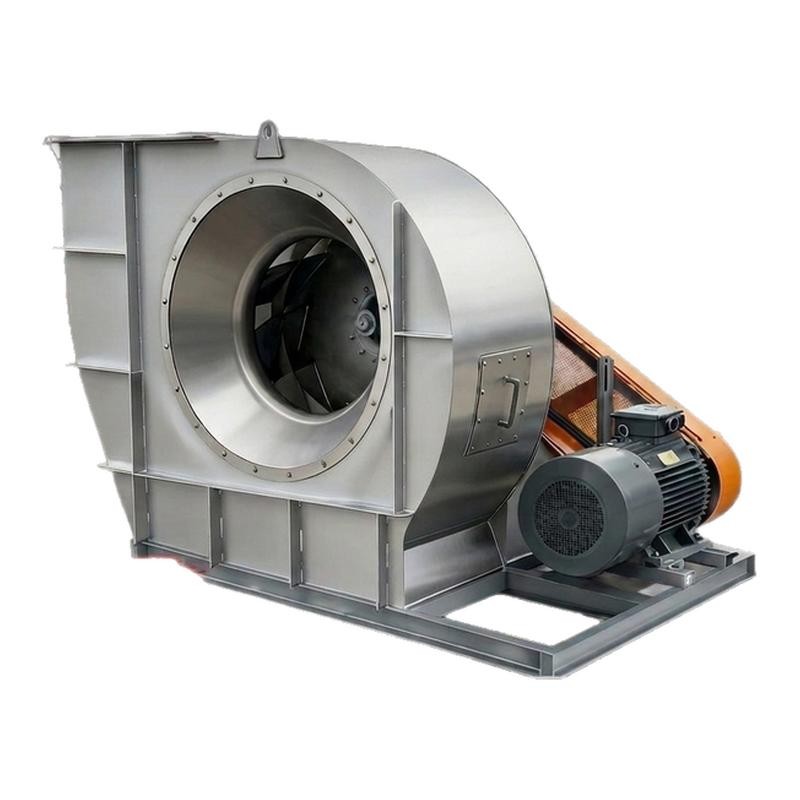
Airflow is one part of welding exhaust fan selection. Duct length, elbows, dampers, hoods, filters, and collectors all add resistance. The fan may move less air after it connects to the final duct system. A centrifugal welding exhaust fan is often checked for ducted systems with more resistance. A portable axial welding exhaust fan may suit a temporary setup if the layout and compatible duct support it.

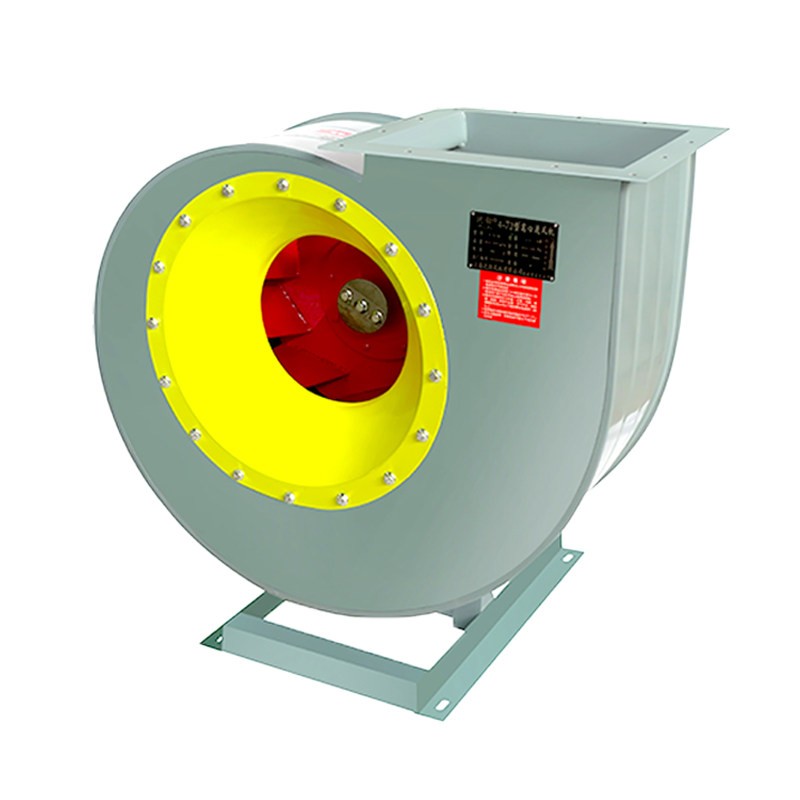
The 9-19 High-Pressure Centrifugal Fan is listed with up to 9,200 Pa. The Carbon Steel 4-72A Centrifugal Fan is listed with up to 2,500 Pa. These are catalogue limits, not a system answer. Compare the needed airflow and calculated resistance with the selected fan curve. Tell the supplier about long ducts, bends, filters, and collectors when you ask about a welding exhaust fan.

Check the Air Stream

Welding can create heat, metal dust, and process gases. The welding exhaust fan, duct, filter, and discharge method must fit the real air stream and site rules. A general industrial welding exhaust fan is not right for every welding process or location. Check for needs related to heat, corrosion, combustible material, hazardous areas, and emissions control.

  • State the welding process and material so the expected fume can be reviewed.
  • Check the air temperature at the welding exhaust fan inlet during work.
  • List each filter, collector, or device that adds resistance to the duct path.
  • Provide the power supply, clearances, and safety class needed at the site.

Set the Installation Layout

Plan the welding exhaust fan and the installation at the same time. Put the fan where staff can inspect and service it. Support ducts so their weight does not load the fan connections. Avoid sharp duct changes when possible because they add resistance. If noise matters, check the full layout. Ducts, supports, and acoustic parts can affect the sound at the work area.

For a portable welding exhaust fan, plan the duct route so it does not block access or create trip risks. For a fixed system, show the fan position, service space, collector access, and discharge point. A simple sketch with sizes can improve a quote discussion.

Send Clear Details for Review

When you ask about a welding exhaust fan, send the airflow if known, duct size and length, bend count, hood size, process, work hours, power supply, inlet temperature, and site conditions. Add photos or a drawing if you have them. These facts help compare the listed portable axial product and the centrifugal products without choosing a welding exhaust fan from a headline rating alone.

Welding Exhaust Fan FAQ

Questions for checking a fan and duct setup.

How do I size a welding exhaust fan?

Start with the welding process, active stations, work-area layout, hood position, and route to discharge or treatment. Then list duct size, total length, bends, dampers, filters, and any collector. These facts set the airflow need and system resistance. A supplier can compare the operating point with fan data, but the final system must also meet the site’s ventilation and safety rules. Do not select a welding exhaust fan only from the maximum airflow in a product title.
Review a centrifugal welding exhaust fan when the system has long ducts, elbows, hoods, filters, or collection equipment that create resistance. The 9-19 and 4-72A products on this page are real centrifugal options with different listed pressure limits. Neither is an automatic match for a welding task. Compare system resistance and needed airflow with the fan curve. Then check the air stream, temperature, power supply, and installation conditions before you choose a welding exhaust fan.
A portable axial welding exhaust fan can be reviewed for temporary air movement or a mobile duct setup when its product limits and work conditions support that use. The listed Portable Axial Flow Fan is described as compatible with telescopic air ducts for enclosed-space ventilation. It is not a complete fume-control answer by itself. Review pickup position, duct routing, discharge, fume type, and any rules for combustible or hazardous conditions with a qualified designer and the site safety team.
Send work-area size, welding process and material, active station count, work hours, desired airflow if known, duct size and length, bend count, hood details, and power supply. Also state whether a filter or collector is present, the expected inlet temperature, and the installation location. Photos or a layout sketch help. These facts support a useful review of a portable axial welding exhaust fan or a centrifugal welding exhaust fan for the planned system.

Get a Free Quote

Our representative will contact you soon.
Email
Mobile/WhatsApp
Name
Company Name
Message
0/1000