Define the Cooling Duty
A cooler exhaust fan is one part of a heat plan. Start by defining what must leave the space. It may be warm air, moisture, process heat, fumes, or a mix of these. Record the room size, heat sources, work hours, and the air path. This helps show if the need is general ventilation or local extraction. It also helps avoid a poor air path. A cooler exhaust fan should pull air through the target zone, not around it.
For a new site, mark the air intake and the discharge point. For a retrofit, note where heat builds up and where airflow stops. A cooler exhaust fan cannot lower the room below the air that enters it. Still, a cooler exhaust fan can help remove heat when make-up air has a clear path. If the room has cooling equipment, plan the exhaust route with that equipment. The two systems should not pull against each other. A cooler exhaust fan needs enough replacement air to work as planned.
Use Airflow and Pressure Together
A rated airflow is useful. It is not the full selection basis. The delivered airflow changes with system resistance. Duct length, elbows, filters, dampers, screens, and outlets all add pressure loss. A cooler exhaust fan can look large enough in free air but move less air after installation. The reason is often a mismatch between the fan duty point and the duct route. It is not always a product fault. Review the cooler exhaust fan curve with the planned system resistance.
- Use a cooler exhaust fan with an axial design when the air path is open and resistance is low.
- Consider a cooler exhaust fan with a centrifugal design when the duct route has more resistance.
- Ask for airflow and static pressure together when you request a cooler exhaust fan.
- Keep the discharge path direct where the layout allows it.
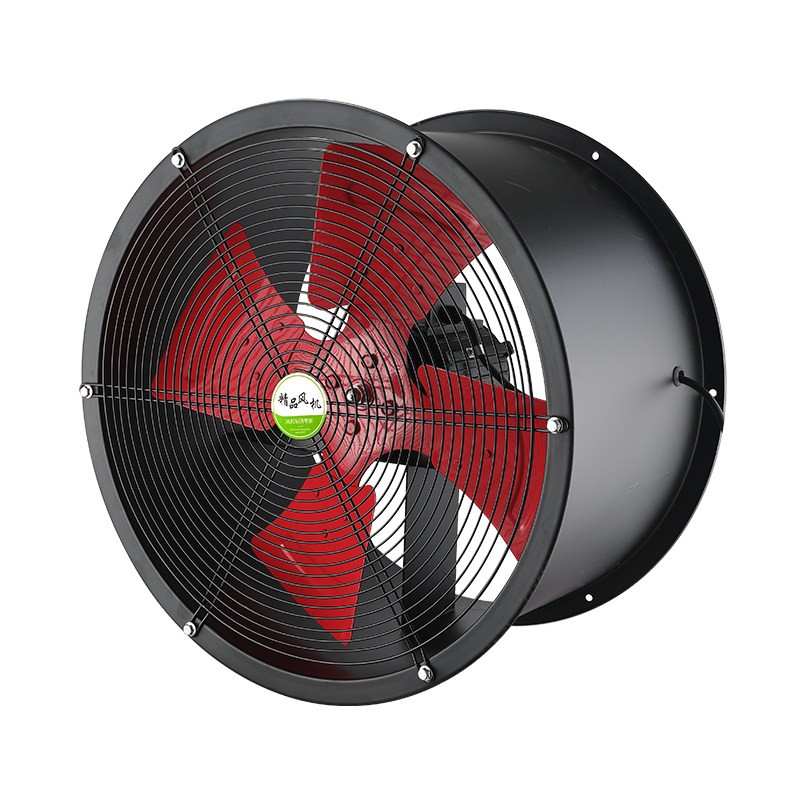
This page lists both axial and centrifugal categories. The term cooler exhaust fan does not name one exact fan type. The final choice should fit the duty point, the duct layout, and the site environment.
Check the Fan Environment
Check the temperature at the fan. Do not use only the average room temperature. A high-level position or a poorly shaded enclosure may be much hotter. If the air near the motor stays within the product rating, a standard setup may suit the site. If summer peaks, humidity, corrosive air, or process heat are present, send those facts first. They affect the choice of motor, housing, and blade materials.
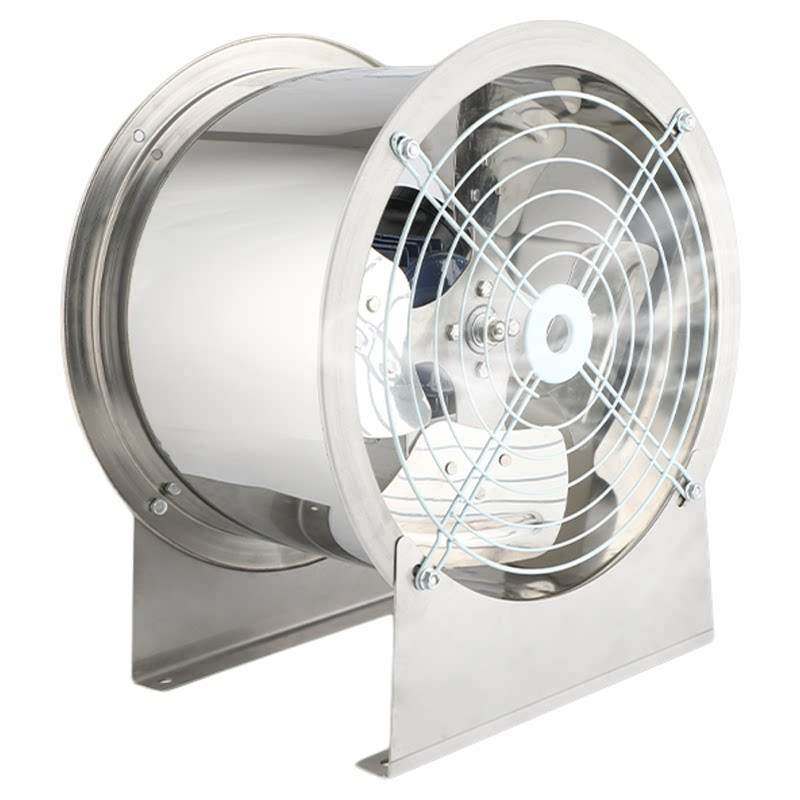
The selected catalog products show different use cases. One is a 304 stainless steel axial fan for drying rooms. One is an aluminum blade axial fan for tobacco curing. One is a portable axial flow fan for confined spaces. One is an 11-62 low-noise centrifugal fan for hotel kitchens. These are not exact equivalents. Confirm product data and the intended use before you order a cooler exhaust fan.
Plan the Air Path and Mounting
A cooler exhaust fan needs a clear air path. Put the exhaust point near the warm air. Arrange make-up air to cross the area that needs ventilation. Do not place the intake and discharge too close together. Hot discharge air can return to the intake. In a ducted system, support the duct and seal its joints. Avoid sharp changes in duct size where possible. Leave room for checks, cleaning, and service.
Mounting also affects a cooler exhaust fan. Check the wall, roof, or equipment opening. Check clear space around the unit and the power supply. A portable unit may help with short-term ventilation and flexible duct use. A fixed unit may suit a permanent room. The right setup depends on the task. It does not depend only on the largest airflow figure. The cooler exhaust fan should also fit the opening and service space.
Prepare a Clear Request
Send one short brief when you request a cooler exhaust fan. Include airflow, static pressure or a duct sketch, motor-area temperature, air content, position, voltage, frequency, noise limits, and size limits. Photos and a simple layout drawing can help on a retrofit. These details give the supplier a better basis for a cooler exhaust fan discussion.
Taizhou Zicheng Electromechanical Co., Ltd. makes axial fans, centrifugal fans, kitchen exhaust fans, and blowers. Send the application facts with your cooler exhaust fan request. This allows the proposed product type to be considered against the real system instead of a keyword alone.

 EN