Choose by the Job
Types of fans and blowers should be chosen by the job, not by the name alone. Start with the airflow you need and the resistance in the air path. Ducts, bends, filters, grilles, hoods, and process gear all add resistance. A fan can move much less air after it is linked to a long duct. Note the airflow, pressure, air temperature, air type, power supply, and mounting space.
Types of fans and blowers also serve two broad jobs. One job is room air change or heat removal. The other is process air. Process air may move through a duct, feed an aeration tank, or create suction. This difference helps you compare types of fans and blowers with a clear goal.
Axial Fans for Open Air Paths
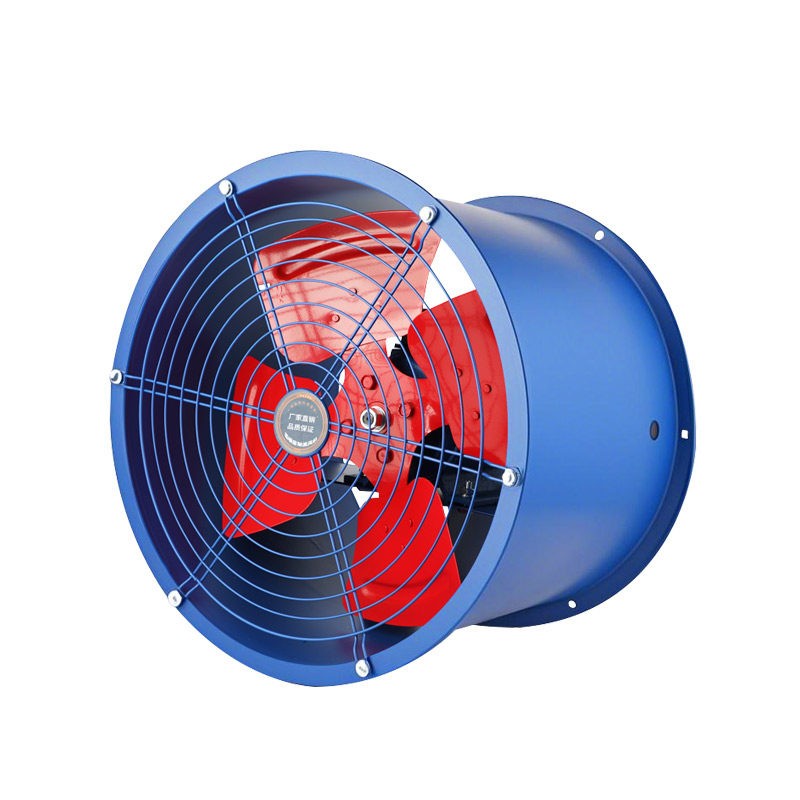
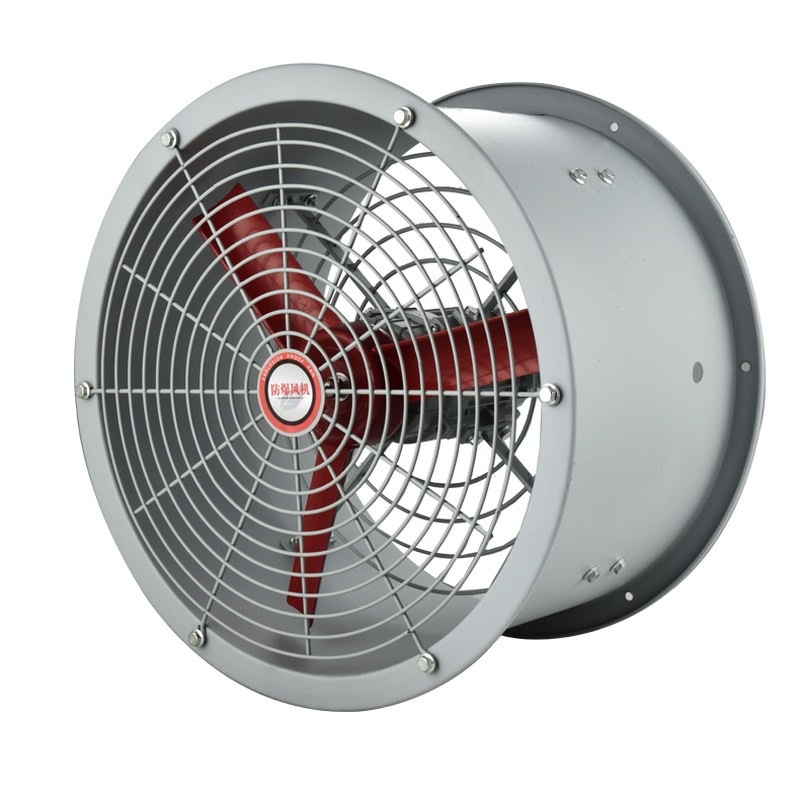
Types of fans and blowers include axial fans. An axial fan moves air along its shaft. It is often a good starting point for high air volume and low system resistance. It can suit wall air change, room cooling, air mixing, drying, or short air paths. The 304 Stainless Steel Axial Fan 200°C for Drying Rooms is a catalog example. The Portable Axial Flow Fan 10,000 m³/h for Confined Spaces is a mobile example that can link to a telescopic duct.
- Types of fans and blowers with an axial layout can fit short or open air paths.
- Types of fans and blowers for mobile work need a safe position and a clear discharge path.
- Types of fans and blowers for hot work need a check of both air and room temperature.
Types of fans and blowers are not ranked by free-air flow alone. An axial fan may be a good fit, but its curve must match the real duct loss. This is a basic industrial ventilation fan check. Use an industrial ventilation fan where the air path and duty point support that choice.
Centrifugal Fans for Duct Pressure
Types of fans and blowers also include centrifugal fans. A centrifugal fan turns air through an impeller and housing. It is often used when ducts, filters, or hoods create pressure loss. The 304 Stainless 4-72A Centrifugal Fan 2,500 Pa for Chemicals is a catalog example. Its record states 2,500 Pa, non-self-igniting and non-corrosive gases, a top gas temperature of 80°C, and a particle limit of 150 mg/m³.
Types of fans and blowers must stay inside their stated limits. Do not choose a centrifugal unit by pressure alone. Check the gas, dust, temperature, duct route, and voltage. This is the core of centrifugal fan selection. Careful centrifugal fan selection compares the duty point with the product limits. Sound centrifugal fan selection also checks the air path before an order.
Vortex Blowers for Air Supply or Suction
Types of fans and blowers include vortex blowers for pressure or suction work. The Oil-Free Aluminum Alloy Vortex Blower 90 kPa for Aeration is a catalog example with both blowing and suction functions. Its record lists a top pressure of 90 kPa. It is used for aeration, material flow, drying, and dust removal. These types of fans and blowers are useful when a process needs controlled air in a compact unit.
Types of fans and blowers do not have one best answer. A vortex blower may fit a pressure or suction task. A centrifugal fan may fit a ducted air task. Axial types of fans and blowers may fit broad air movement. Compare the full operating need, not one large number. An industrial ventilation fan should be checked against the whole air system.
Send a Clear Selection Brief
Types of fans and blowers are easier to compare when the inquiry has clear facts. Send the use case, airflow, pressure or duct size, temperature, air type, voltage, and mounting limits. For a replacement, send photos of the nameplate and duct joint. For a new system, send a duct sketch with lengths and bends. This supports centrifugal fan selection and helps identify an industrial ventilation fan that suits the task.
Types of fans and blowers should not be oversized just to add margin. A unit that is too large can add noise, unstable flow, and wasted power at part load. Match the unit to the duty point, then confirm the final configuration before purchase.

 EN