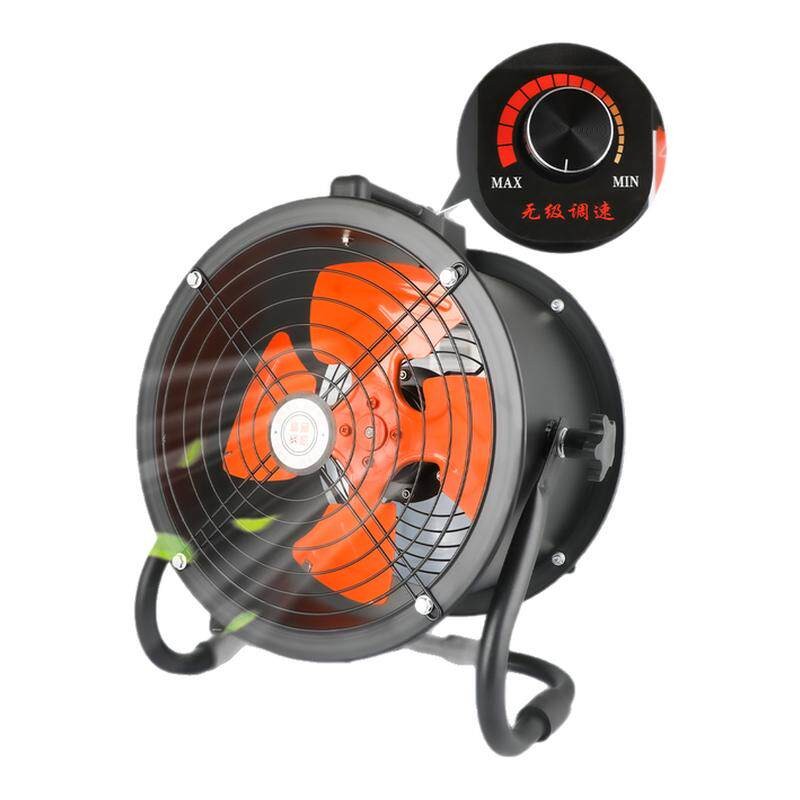
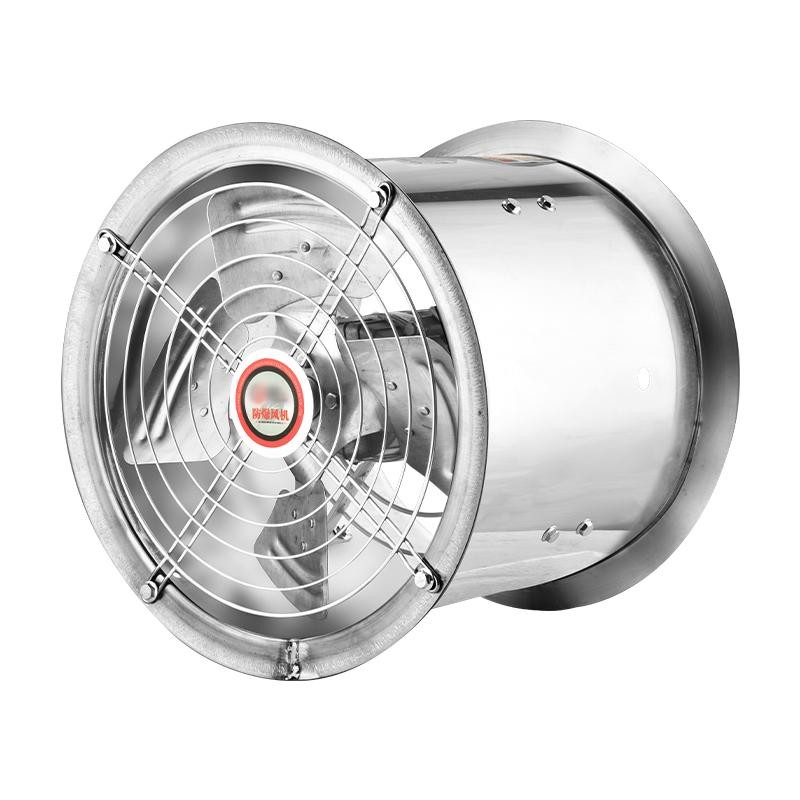
Set the Duty Point First
An industrial air blower fan needs a clear duty point. State the air flow at the point of use. State the static pressure too. Duct length, bends, filters, hoods, dampers, and vents all add loss. A fan may move a lot of air with no duct. It may move far less air when it is on a long duct run. Give the air flow, pressure loss, inlet and outlet plan, and power type when you ask for a fan.
Do not pick an industrial air blower fan by motor size alone. A large motor is not proof of a good fit. The key is the point where the fan curve meets the system curve. This is the point that shows what air flow the fan can give in the real system. If the data is not known, a duct sketch and the use of the air can help start the talk.
Use the Right Fan Type
An axial industrial air blower fan is often used when high air flow is the main need and the air path has low loss. The selected Aluminum Blade Axial Fan record lists 39,000 m³/h for tobacco curing. That record gives one high-flow option to review. The final fit still depends on the real duct loss and site plan.
A centrifugal industrial air blower fan is often used for duct work with more loss. The selected carbon steel 4-72A record lists up to 2,500 Pa. The CF-11 record lists up to 1,000 Pa. Use these values as a way to start a centrifugal fan selection. They are not a promise that each unit will fit all jobs. Compare the required duty point with the right product data.
Check the Air and Site
Each industrial air blower fan must suit the air it moves. Ask what is in the air. Note the gas heat, dust, wet air, and any risk of rust. The carbon steel 4-72A record gives an 80°C max gas heat. It also gives a 150 mg/m³ limit for dust and hard bits. It says the gas must be non-self-igniting, non-toxic, and not harmful to steel. If your air does not fit these facts, ask for a full review.
The 304 stainless 4-72A is an industrial air blower fan option with a 304 stainless steel case. A steel grade is one part of a fan choice. You must still share the heat, wet air, dust, and site use. This lets the team review the whole air path, not just the fan shell.
Plan the Fan Fit
Plan how the industrial air blower fan will join the duct. Check room for the inlet, outlet, base, guard, and motor. Check if the crew can get to the fan for care. The 4-72A records list A, B, C, and D forms. Match the form to the job drawing before you buy. Do not wait until the unit is on site.
Set a care plan for each industrial air blower fan. An industrial air blower fan in dust or heat may need more checks. Inspect the impeller, bolts, bearings, and drive parts when they apply. Remove build-up in line with the maker guide. Easy access helps the crew work in a safe way.
Build a Useful RFQ
A good RFQ helps us discuss an industrial air blower fan with less guesswork. List the air flow, static pressure, gas heat, dust level, duct size, power, and site use. Add the inlet and outlet path. Add notes on wet air, rust, or other site risks. For kitchen exhaust, show the hood and duct path. For drying, show the heat and wet air at the fan inlet.
Use the term industrial ventilation fan when the job is air change in a plant or large room. Use centrifugal fan selection when duct loss is a key part of the job. An industrial air blower fan can be a good fit only after the system data is clear. Taizhou Zicheng Electromechanical Co., Ltd. makes axial fans, centrifugal fans, kitchen exhaust fans, and vortex blowers. Share your data so we can discuss the right product and quote.
Quick Project Check List
- An industrial air blower fan needs a known air flow target.
- An industrial air blower fan needs a known static pressure target.
- An industrial air blower fan needs clear gas and heat notes.
- An industrial air blower fan needs a duct plan and a fit plan.
- An industrial air blower fan needs a power and voltage note.
- An industrial air blower fan needs room for safe service.
- An industrial air blower fan needs a check of the fan curve.
- An industrial air blower fan needs a check of material fit.
- An industrial air blower fan needs a clear project use case.
- An industrial air blower fan needs a full RFQ for a useful quote.
- An industrial air blower fan needs a duty point before a final model choice.
- An industrial air blower fan needs a review of duct loss and air flow.
- An industrial air blower fan needs site facts before a quote can be set.
- An industrial air blower fan needs a clear use case for a sound fan choice.
- An industrial air blower fan needs the right material for the air path.
- An industrial air blower fan needs an inlet and outlet plan.
- An industrial air blower fan needs a simple plan for checks and service.
- An industrial air blower fan needs system data, not just a product name.

 EN