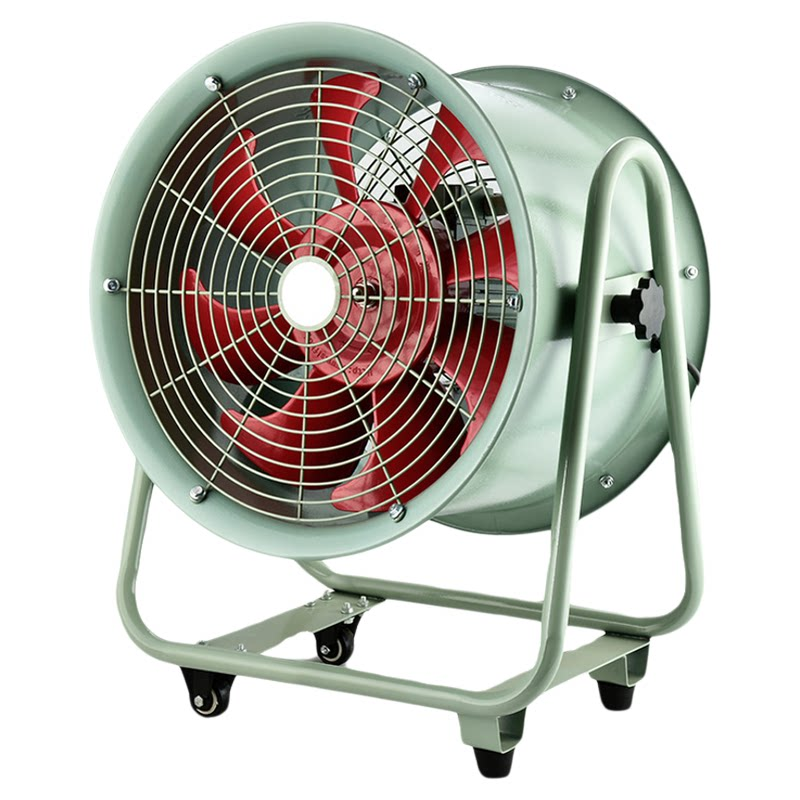
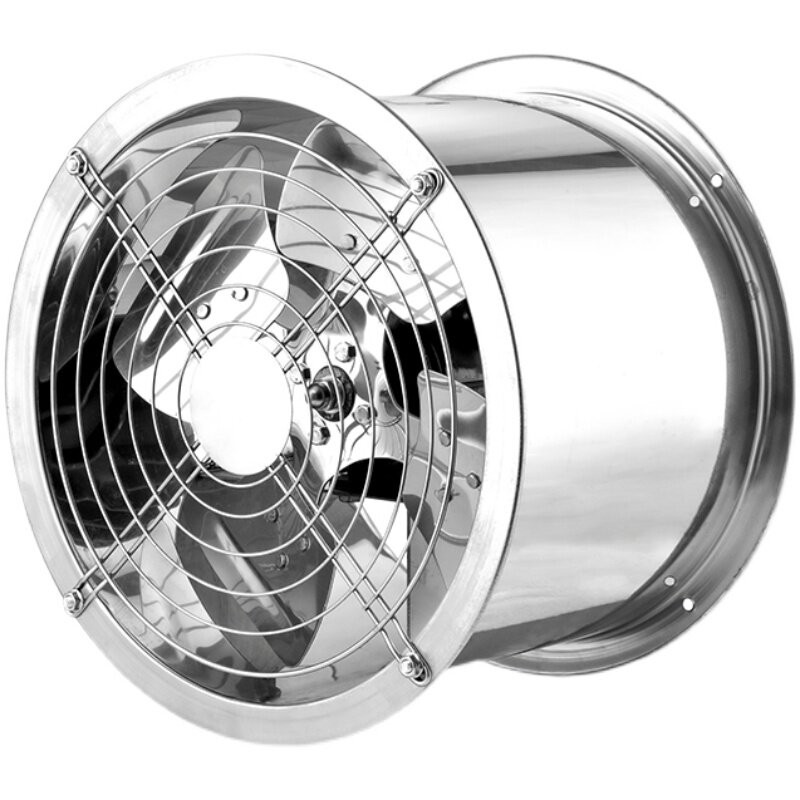
Define the Air System First
A blower fan manufacturer needs clear system data. Start with the airflow that the system needs. Then state the static pressure that the fan must overcome. Static pressure comes from ducts, bends, filters, hoods, dampers, and fittings. A blower fan manufacturer can compare this duty point with a fan curve. This is more useful than choosing by a peak number.
Give the airflow and pressure if you have them. Also give duct size, duct length, inlet and outlet direction, and the job of the fan. Say if the fan will supply air, pull air out, blow air, or move material. An industrial ventilation fan should fit the whole path. A drawing can help when the exact pressure loss is not known.
Choose the Pressure Class
The selected catalog items show two pressure paths. The 4-72A centrifugal fans list up to 2,500 Pa and up to 20,000 m³/h. The selected 9-19 and 9-26 high-pressure centrifugal fans list ratings up to 9,200 Pa and up to 7,000 m³/h. This gives a buyer more than one option to discuss with a blower fan manufacturer.
- Use a 4-72A as a starting point when the duty point is within its listed range.
- Review a high-pressure model when the duct path has high resistance.
- Use centrifugal fan selection data, not a peak pressure figure alone.
- Check the fan curve with the system curve before you issue an order.
More pressure is not always the better choice. A large fan can be the wrong fit for a small system. A smaller fan can also fail to move enough air through a long duct. Good centrifugal fan selection balances flow, pressure, and motor power. This is why a blower fan manufacturer should receive the full duty point.
Check the Air and Site Conditions
An industrial ventilation fan must also fit the airstream. The selected 304 stainless 4-72A product lists a 304 stainless steel housing. Its record lists a maximum gas temperature of 80°C. It also lists dust or hard particles up to 150 mg/m³. The selected carbon steel 4-72A record lists the same temperature and particle limits for its stated conditions.
Material choice should follow the air and the site. The stainless steel option may be relevant when a buyer needs that housing material. The carbon steel option has a different housing material. Do not assume that a fan family fits every gas. Give the medium, temperature, dust level, and site limits to the blower fan manufacturer. This helps with centrifugal fan selection.
Do not use these records for a flammable, explosive, sticky, or very hot stream without a specific review. A normal room temperature may not equal the air temperature at the fan inlet. Measure the peak inlet condition where possible. An industrial ventilation fan should be chosen for the real operating condition.
Check the Installation Details
Mechanical details matter too. The selected 4-72A records list A, B, C, and D structural forms. These forms may help with duct routing and mounting. The selected 9-19 record lists motor options from 0.75 kW to 30 kW and a 380 V motor setup. Confirm voltage, frequency, rotation, inlet direction, outlet direction, and space for service before you buy.
Noise and vibration are system issues as well. Duct support, flexible links, isolation, and system balance can affect the result. Tell the blower fan manufacturer if the unit will be near people or on a light structure. This improves the centrifugal fan selection discussion. It also helps identify site limits early.
Send a Useful Request
A good request makes an industrial ventilation fan easier to compare. State the medium, airflow, pressure, temperature, particle level, material need, electrical supply, quantity, and installation plan. State whether you want a catalog item or a non-standard configuration. Include photos or a drawing if they are available.
Taizhou Zicheng Electromechanical Co., Ltd. makes axial fans, centrifugal fans, kitchen exhaust fans, and vortex blowers. A blower fan manufacturer can review whether one fan type or several fan types suit the project. There is no single correct fan for every job. Clear operating data supports a better centrifugal fan selection and a more focused quote discussion. A blower fan manufacturer can review this information. Industrial ventilation fan data should be clear. Centrifugal fan selection should use the real duty point.

 EN