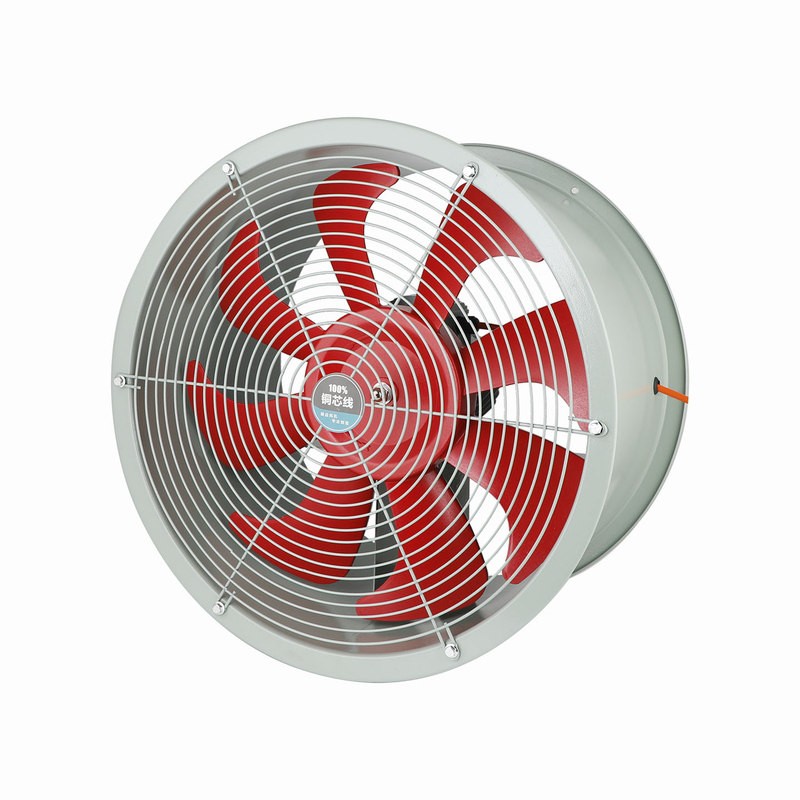
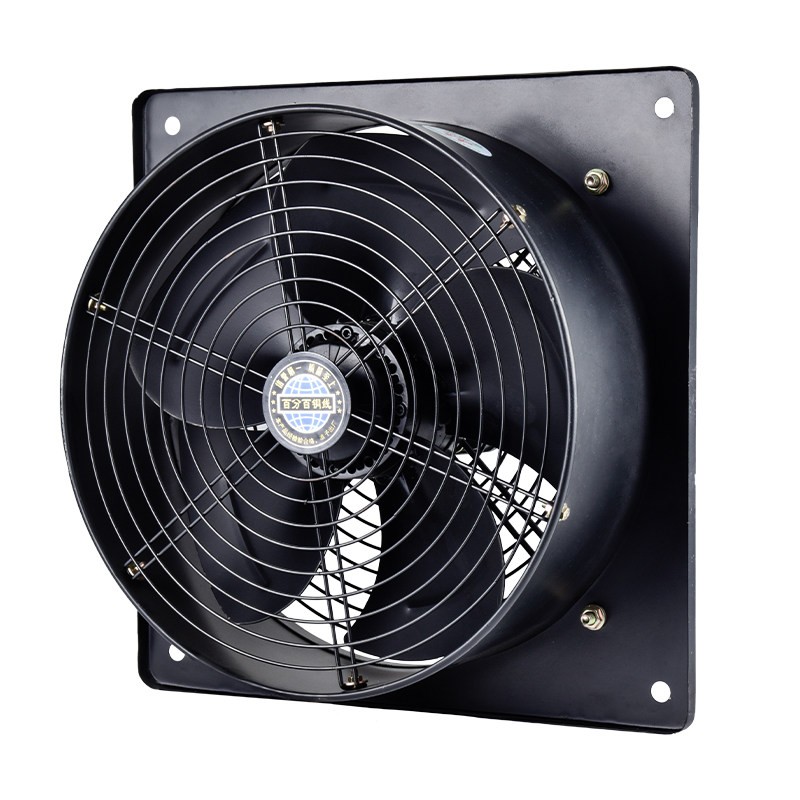
Define the Air Fan Industrial Duty
An air fan industrial request should start with the work the fan must do. State the airflow. State the pressure. State the air temperature. Also show the duct size, duct length, bends, filters, and dampers. These details show the real load. They are more useful than a peak airflow number alone.
For each industrial ventilation fan, note the air stream and the site. Is it normal room air, warm air, humid air, or process air? Is the fan indoors or outdoors? What voltage is available? An air fan industrial RFQ is easier to review when these facts are clear. The supplier can then discuss the product family and the needed configuration.
Compare Axial and Centrifugal Types
An industrial ventilation fan can use axial flow or centrifugal flow. Axial flow often suits large air volume through a short and open path. The selected 304 Stainless Steel Axial Fan 200°C for Drying Rooms is an axial option for drying projects. Its fit still depends on the stated process conditions.
A centrifugal fan selection can suit a path with more resistance. Ducts, bends, filters, and outlets all add resistance. The selected 4-72A products are centrifugal options. The selected 11-62 model is also a centrifugal option. For a centrifugal fan selection, compare the project duty point with the curve for the exact model. Do not select only from a maximum pressure value.
Check the Air Stream and Material
An air fan industrial project needs a material check. The listed options include carbon steel and 304 stainless steel. The product names point to different uses. They do not prove that one fan fits every air stream. Share the air temperature, moisture, dust, and chemical exposure with the supplier.
- An industrial ventilation fan for a factory needs clear information about dust and air temperature.
- A centrifugal fan selection for humid or chemical work needs details about the exposure conditions.
- An air fan industrial request for a drying room needs the highest process temperature and the length of each heat cycle.
- An industrial ventilation fan for kitchen exhaust needs the hood layout, duct route, and grease equipment details.
Review the Installation Plan
Installation can change the result from an air fan industrial unit. Review inlet and outlet direction, duct connection, support, service space, and vibration control. Plan access for cleaning and repair. Check that nearby walls or equipment do not block the inlet or outlet.
A centrifugal fan selection also needs a duct review. Long runs and loaded filters can raise system resistance. A fan may then deliver less air than expected. For a replacement, send photos of the old unit. Include the opening size, duct direction, power supply, and known problem. This helps avoid extra adapters or a poor match.
Send a Useful RFQ
For an air fan industrial quotation, send airflow, static pressure, temperature, voltage, frequency, duct data, and site photos. Add drawings when space is tight. List each zone if the project has more than one duty point. Do not use one average value for all zones.
Taizhou Zicheng Electromechanical Co., Ltd. offers axial fans, centrifugal fans, kitchen exhaust fans, and vortex blowers. An industrial ventilation fan inquiry can include a preferred product family. A centrifugal fan selection inquiry can also ask about an exact ducted duty. The linked guide gives more background before a final fan comparison.

 EN