Start With the Work Area
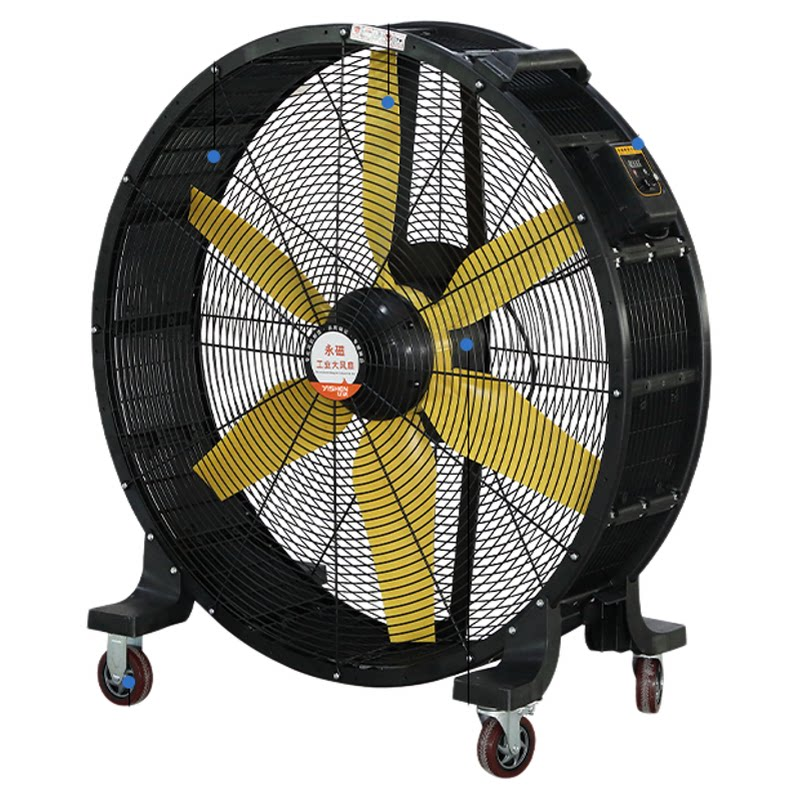
An industrial portable blower fits jobs where the work location changes. It can also help during maintenance. An industrial portable blower may supply air or draw air out. First, define the task. State the size of the work area. State where the unit will sit. List the duct length, bends, and fittings. These details help define the duty.
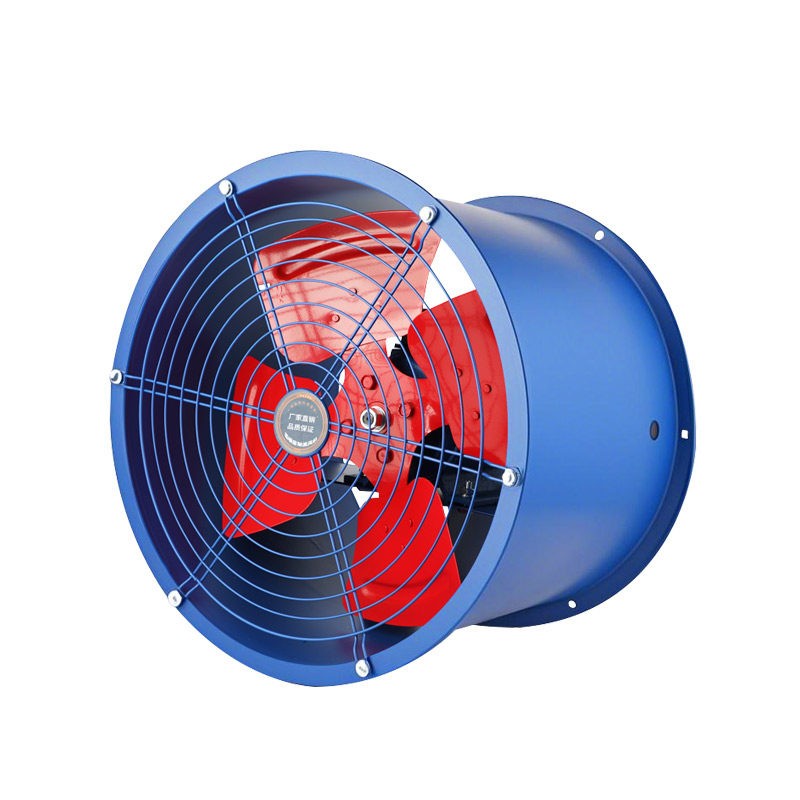
A portable axial flow fan can be a useful option for a temporary route. The selected portable axial flow fan is listed for 3,000 to 10,000 m³/h. Its record also states that it can connect to telescopic ducts. This can support confined-space ventilation when the fan remains near an outside opening. The duct can then carry air to or from the work area.
Compare Airflow and Pressure
Do not choose an industrial portable blower by airflow alone. A duct adds resistance. Bends, filters, and changes in duct size add more resistance. The fan must meet airflow and pressure needs at the same time. A portable axial flow fan may suit a short and simple duct route. It may not suit a high-resistance route.
- Use an industrial portable blower as a starting point for movable, temporary ventilation.
- Use a portable axial flow fan when the stated duty matches the airflow and duct route.
- Consider the 4-72A centrifugal fan for a system with more resistance. Its product record lists up to 2,500 Pa.
- Review the 9-19 or 9-26 centrifugal fan for a high-pressure duty. Their records list up to 9,200 Pa.
A centrifugal fan can be less easy to move than an industrial portable blower. Yet it may be the better choice when pressure is the key issue. Select the fan from the duty point, not from the product name.
Set Clear Operating Limits
State what will move through the system. Also state the inlet temperature. The 4-72A product record specifies non-self-igniting, non-toxic gases that are non-corrosive to steel. It lists a maximum gas temperature of 80°C and particulate content up to 150 mg/m³. The selected 9-19 and 9-26 product records also state non-corrosive and non-self-igniting media. They list an 80°C limit and a particulate limit.
These are product boundaries. They are not a site assessment. Do not use an industrial portable blower for an unusual medium without sharing the full conditions. For confined-space ventilation, give the application details before selection. Where flammable, explosive, or highly corrosive media may be present, a supplier needs the complete operating description.
Prepare a Simple Duty List
A good duty list helps compare an industrial portable blower with a fixed centrifugal fan. Include the required airflow and static pressure. Include duct diameter and route. Include inlet temperature, medium, dust conditions, and power supply. Add transport limits and access limits. For confined-space ventilation, also state where the fan and duct will be placed.
| Question |
Reason |
| Where will the fan sit? |
This affects transport, access, and duct connection. |
| How long is the duct? |
Length and bends increase pressure loss. |
| What is in the air? |
The medium sets the product boundary. |
| What duty is required? |
Airflow and pressure guide the model choice. |
Request a Model Discussion
Taizhou Zicheng Electromechanical Co., Ltd. offers axial and centrifugal fans. Share the duty list when you request an industrial portable blower quotation. The same details help determine whether a portable axial flow fan is suitable. They also show when a centrifugal fan should be reviewed instead. State whether confined-space ventilation is part of the job.

 EN