EN



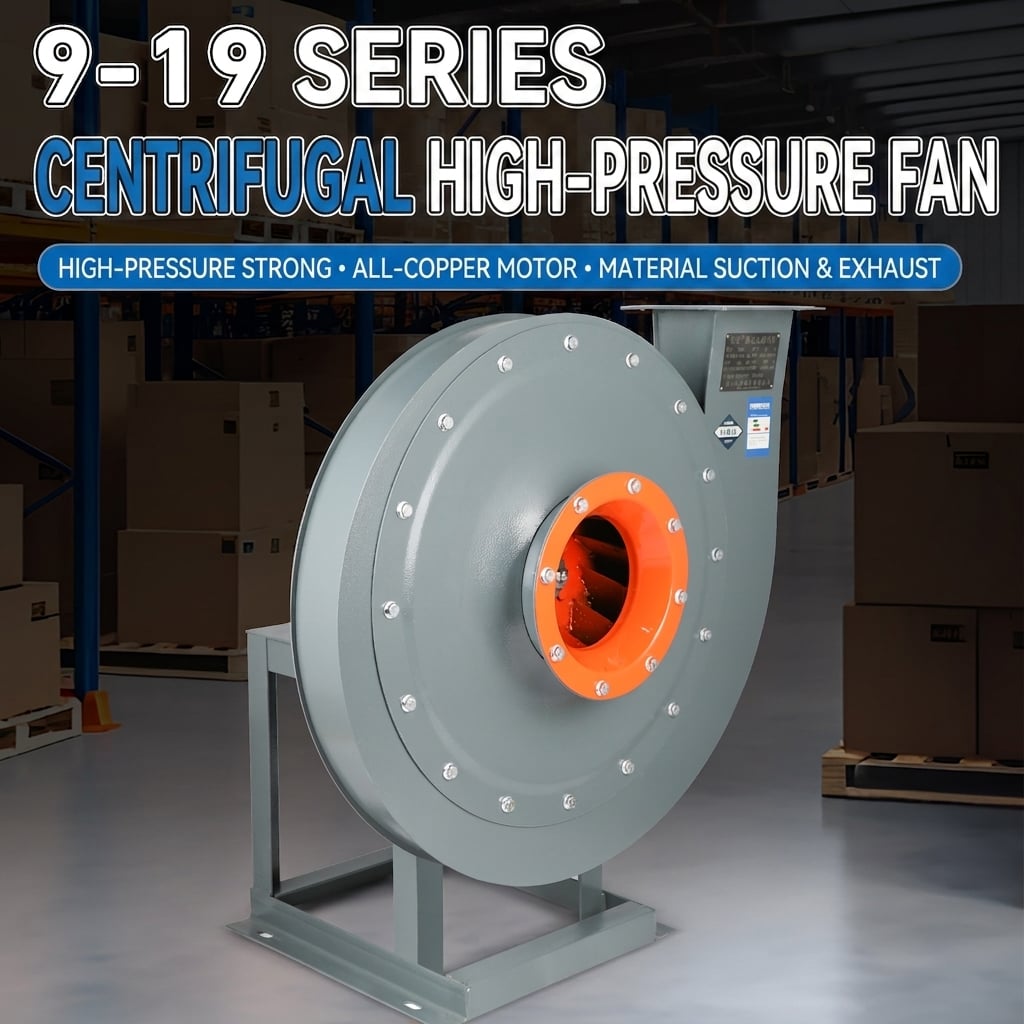
9-26 High-Pressure Centrifugal Fan 30 kW for Conveying
The 9-26 high-pressure centrifugal fans can be widely used for conveying materials, air, and gases that are non corrosive, non self igniting, and do not contain viscous substances. The temperature of the conveyed medium generally does not exceed 80 ° C, and the dust and hard particles contained are not greater than
150mg/m。 Suitable for high-voltage forced ventilation in industries such as general forging and metallurgy, glass, ceramics, radio, electroplating, and batteries, as well as material transportation in processing industries such as grain, feed, mineral powder, and plastics.
- Overview
- Recommended Products
- Dual-use suction and blowing: One unit serves both supply and exhaust functions in many configurations, reducing the number of units required and simplifying multi-zone installations.
- Twelve motor power options: The 0.75 kW to 30 kW range makes right-sizing feasible. In practice, over-specified fans in variable-load applications tend to operate in low-efficiency zones for more hours than the initial estimate, and the accumulated energy cost difference is measurable over a multi-year service life.
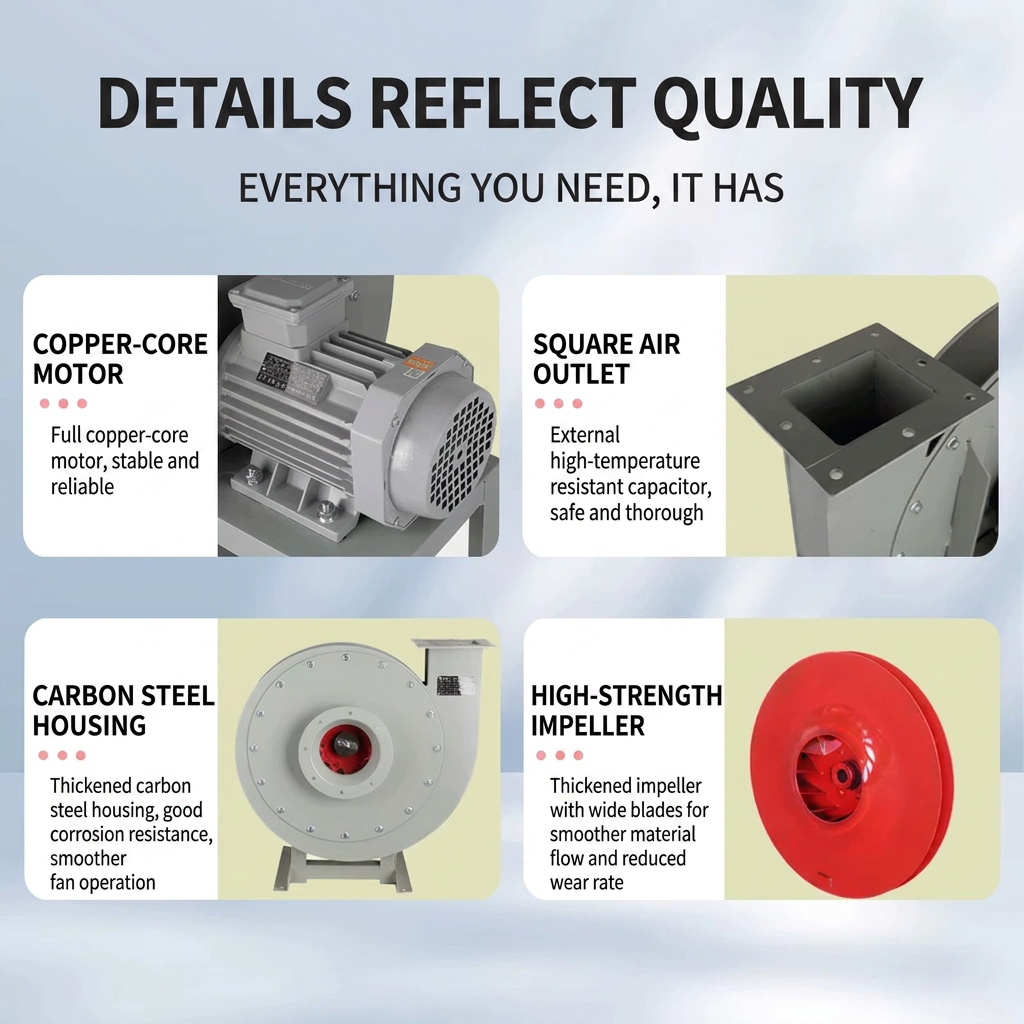
- Copper-core motor: Full copper windings deliver sustained electrical performance under thermal and load cycling — a quality distinction that matters in continuous industrial duty and one that is visible in the motor construction, not just the datasheet.
- Thickened carbon steel housing: Absorbs the mechanical stress of high-pressure continuous operation and resists the dimensional changes that thinner-gauge housings exhibit over years of service in demanding production environments.
- Wide-blade impeller: Distributes blade loading across a larger surface area, extending service life in dust-carrying and material-conveying applications and reducing maintenance frequency compared to narrower blade designs under equivalent particulate loads.
9-26 High-Pressure Centrifugal Fans: Industrial Forced Ventilation and Material Conveying
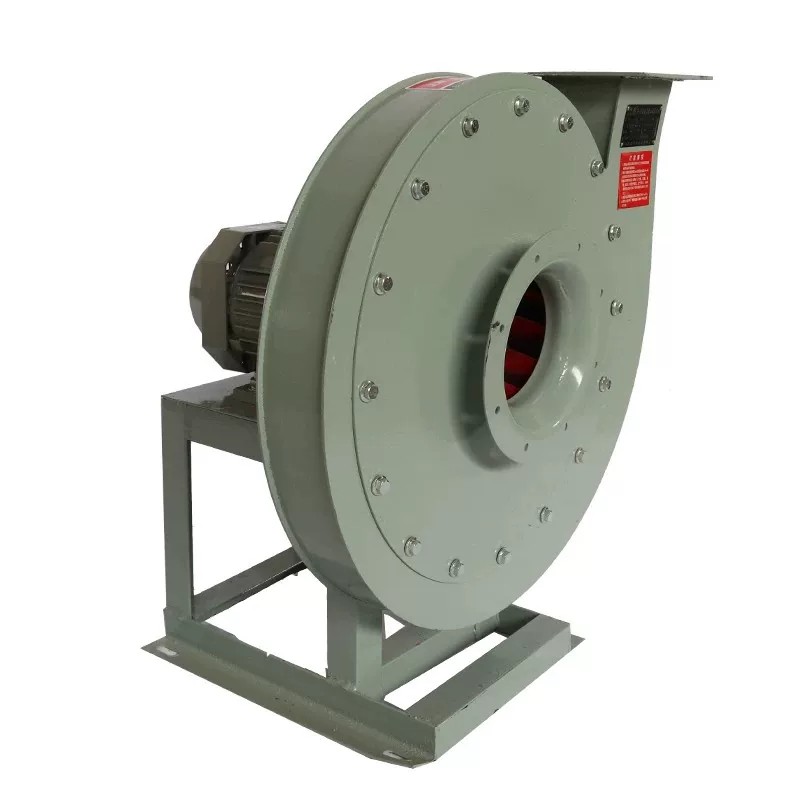
The 9-26 high-pressure centrifugal fans are engineered for industrial environments where standard ventilation equipment cannot hold adequate airflow against the resistance of real ducted systems. Designed to convey non-corrosive, non-self-igniting, non-viscous gases and particulate-laden airstreams with dust and hard particle concentrations up to 150 mg/m³, these fans address a specification gap common in heavy industrial settings. The rated medium temperature limit is 80°C — though in practice, forging lines and ceramics kilns often push working temperatures significantly above standard ambient during peak production, and that factor deserves careful evaluation before finalizing any fan selection. These units support both suction and blowing modes, making them adaptable to a wide range of forced ventilation and material transport configurations without requiring separate intake and exhaust units.

Core Technical Specifications
| Parameter | Specification |
|---|---|
| Maximum Static Pressure | 9,200 Pa |
| Maximum Flow Rate | 7,000 m³/h |
| Available Motor Power | 0.75 kW, 1.1 kW, 1.5 kW, 2.2 kW, 3 kW, 3.8 kW, 4 kW, 5.5 kW, 7.5 kW, 15 kW, 18.5 kW, 30 kW |
| Maximum Medium Temperature | 80°C |
| Max Dust and Particle Content | 150 mg/m³ |
| Operating Mode | Dual-use — suction and blowing |
| Motor Construction | Full copper-core external motor, high-temperature-resistant capacitor |
| Housing Material | Thickened carbon steel, corrosion resistant |
| Impeller Design | Thickened wide-blade for smoother flow and lower wear rate |
Why Buyers Choose High-Pressure Centrifugal Fans Over Standard Alternatives
The reason many industrial ventilation systems underperform is a mismatch between the rated airflow and actual system resistance — not a product defect. Duct bends, filter stages, long horizontal runs, and transitions all consume static pressure that lower-spec units cannot recover. The 9-26 high-pressure centrifugal fans maintain stable pressure even as system resistance increases under partial load or during filter loading cycles, delivering the target airflow at the actual installation point rather than only at the fan outlet. Yes, the 9,200 Pa pressure rating adds unit cost compared to lower-pressure alternatives — that is a real constraint on tight budgets. But if the application runs continuous duty in a forging plant or glass manufacturing zone where ductwork is long and the airstream carries fine industrial particulate, the sustained pressure performance typically justifies the specification.
Application Scenarios
Forced Ventilation in Forging, Metallurgy, and Heavy Industry
The 9-26 high-pressure centrifugal fans are deployed across forging and metallurgy operations, glass production, ceramics manufacturing, electronics assembly, and electroplating and battery plants. These environments share a common demand: ventilation that holds target airflow against long duct runs, heat loads, and process-generated particulate. The 9,200 Pa ceiling allows the fan to serve as the primary exhaust or supply unit in zones where a standard fan would lose effective flow before reaching the work area. When the facility already operates high-voltage distribution infrastructure, the upper power configurations — 15 kW, 18.5 kW, and 30 kW — integrate without additional step-down hardware, simplifying the installation bill of materials.
A point worth noting from field experience in foundry and forging contexts: the fan may be specified for the standard rated ambient, but nobody should assume the general design temperature matches the actual ceiling temperature during peak production hours — the result of that assumption can be motor stress well beyond the rated condition within the first operating season. Confirming that the selected motor's rated ambient aligns with your measured peak temperature is a step that should not be skipped in high-heat environments.
Material Conveying in Grain, Feed, Mineral Powder, and Plastics
Beyond ventilation, the 9-26 series handles active material transport in grain processing, feed production, mineral powder handling, and plastic granule conveying. The thickened wide-blade impeller reduces blade loading from particulate-laden airstreams, extending service life where standard impellers would show accelerated erosion. The pressure ceiling provides headroom to maintain throughput in transfer lines where system resistance varies with material loading — a variable that steady-state fan sizing does not always capture accurately. For mineral powder or grain conveying lines with variable batch sizes, the twelve available motor power ratings make it practical to match the drive to the typical operating load rather than the peak load.
High-Heat Environments: Glass and Ceramics Production
Glass tempering zones and ceramics kiln areas combine sustained high ambient temperature with fine airborne particulate. The 9-26 high-pressure centrifugal fans address both challenges: the thickened carbon steel housing with corrosion resistance handles mechanical stress under continuous operation, while the copper-core motor with a high-temperature-resistant capacitor maintains electrical performance under thermal load. The spec sheet only tells part of the story; real-world performance in a ceramics kiln ventilation application also depends on verifying the actual thermal profile of the installation zone, not just the nominal process temperature in the facility design documents.
Key Functional Advantages
Selection and Sizing Notes
Sizing 9-26 high-pressure centrifugal fans correctly requires working with actual system resistance, not just the theoretical duct resistance from design-stage calculations. As-installed resistance accumulates through unplanned bends, retrofitted filters, and connection losses that were not in the original design. When system resistance is underestimated, even a well-matched fan will appear to underperform at the measurement point. Selecting a motor power rating that keeps the operating point comfortably within the stable region of the pressure curve — rather than right at the edge — provides a practical margin for these real-world deviations. For facilities with high-voltage distribution — common in large metallurgical plants and mining operations — the higher power configurations connect directly to existing infrastructure. Customization is available for applications where standard catalogue configurations do not match specific electrical, dimensional, or airstream requirements, making the 9-26 series a viable option for both project-specific OEM procurement and stock replacement sourcing.