Floor Blower Options for Industrial Air Movement

Get a Free Quote

Our representative will contact you soon.
Email
Mobile/WhatsApp
Name
Company Name
Message
0/1000
Floor Blower Options for Industrial Air Movement

Floor Blower Options for Industrial Air Movement

This floor blower page helps buyers compare portable axial and centrifugal fan options. A floor blower can support temporary air movement, local ventilation, ducted airflow, or process work. The right choice depends on airflow, system resistance, space shape, power supply, and the airstream. Taizhou Zicheng Electromechanical Co., Ltd. offers axial and centrifugal fan categories. The range includes a portable axial flow fan for confined spaces and centrifugal fan options for factory ventilation or conveying. Use a portable axial flow fan when the job changes or a fixed fan is not practical. Use a centrifugal floor blower when ducts, bends, or filters add resistance. Share your application, airflow, and operating conditions to discuss a suitable configuration and quote.
Get A Quote

Factory Context for Fan Sourcing

Direct manufacturer and product-range context for floor blower buyers.

Direct Manufacturing

Taizhou Zicheng Electromechanical Co., Ltd. makes the fan products it offers. Buyers have a direct point of contact for product and application discussion.

Multiple Fan Categories

The documented range includes axial fans, centrifugal fans, kitchen exhaust fans, and vortex blowers. Buyers can compare fan types for different airflow tasks.

Project Input Focus

The site asks buyers for airflow, static pressure, and operating conditions. This helps connect a floor blower discussion to the real system need.

Related products

Portable Airflow at the Work Area

Portable Airflow at the Work Area

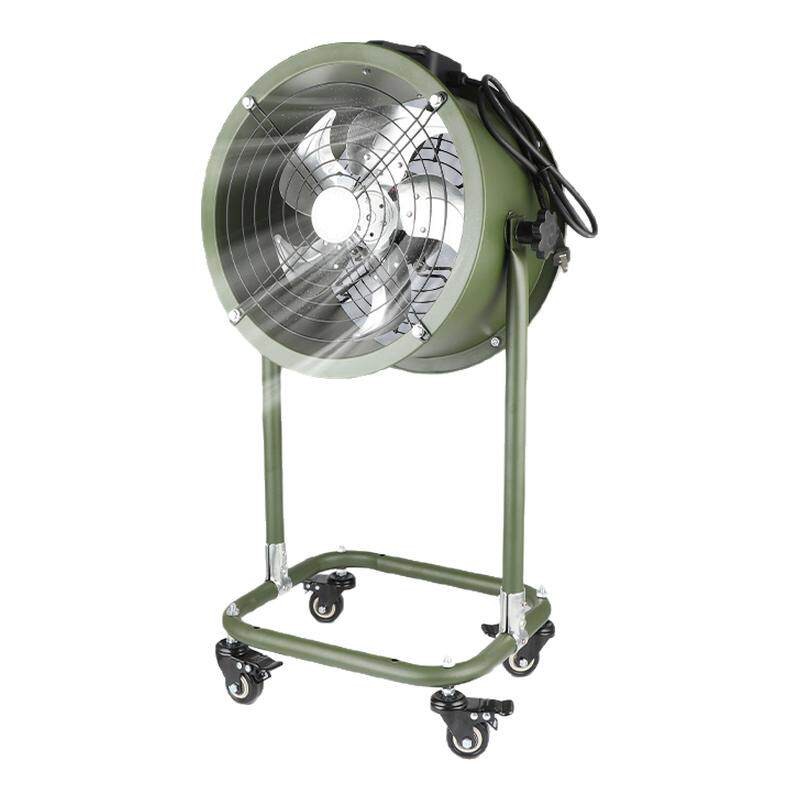
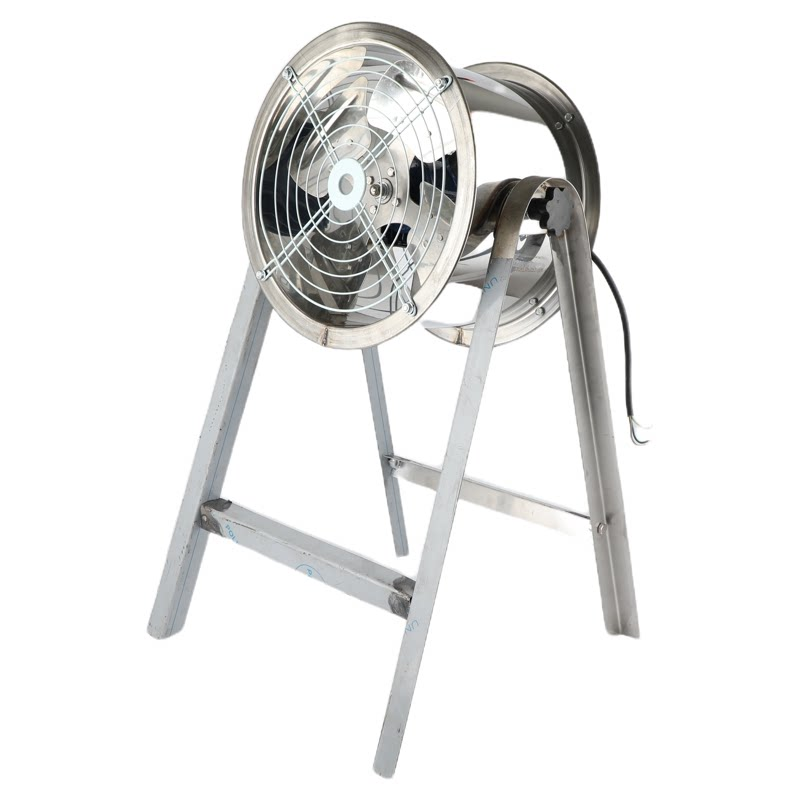
The Portable Axial Flow Fan 10,000 m³/h for Confined Spaces fits a floor blower job that must move with the work. It can connect to telescopic ducting. Its recorded range is 3,000 to 10,000 m³/h across available configurations. A portable axial flow fan works well for temporary air movement, but the final choice should match the space, duct run, and airflow need.

Define the Floor Blower Job

A floor blower can mean more than one product. Some buyers need a portable axial flow fan near a work area. It may supply fresh air or remove air through flexible ducting. Other buyers need a centrifugal floor blower as part of a fixed duct system. Start with the job. Is it open-area air movement, local ventilation, confined-space ventilation, fume removal, or conveying? The airflow path matters as much as the floor blower location.

A portable axial flow fan is useful when the fan must move between jobs. The listed product can connect to telescopic ducting. A centrifugal floor blower is usually the better starting point when long ducts, filters, bends, or process equipment add resistance. A floor blower name alone does not define the correct fan type.

Check Airflow and Pressure

Airflow is not the only number that matters. Ducts, elbows, filters, and grilles reduce the air that reaches the work area. For a short and simple path, a portable axial flow fan may fit the job. The selected portable axial flow fan record lists 3,000 to 10,000 m³/h across its configurations. For a ducted floor blower system, compare pressure too. The listed 4-72A centrifugal fan is recorded with up to 2,500 Pa. The listed 9-19 high-pressure centrifugal fan is recorded with up to 9,200 Pa.

These ratings do not mean one fan is right for every floor blower job. Ask for a fan curve. Match it to the actual duty point. The duty point is the airflow needed after the system resistance is included. A fan that looks strong in free air may not meet the need after ducting is added.

Choose the Fan Type

  • Portable axial flow fan: Use this type for temporary work, local ventilation, or confined-space ventilation when the unit must move and ducting is useful.
  • General centrifugal fan: Use this type for a floor blower system with moderate duct resistance in a factory or large building.
  • High-pressure centrifugal fan: Use this type when the duty needs high pressure for ducted ventilation or conveying. Extra pressure is not always useful in a low-resistance system.

A larger floor blower rating is not always safer. An oversized unit can create control problems and unwanted noise. A fan chosen only for free-air volume can also disappoint after filters and ducting are added. Include airflow, static pressure, duct size, bends, and supply or exhaust direction in your request.

Check the Airstream First

Check the gas or air before choosing a floor blower. The selected 4-72A record identifies non-self-igniting, non-toxic gas that is non-corrosive to steel. It also lists a maximum gas temperature of 80°C and a maximum particulate content of 150 mg/m³. The high-pressure products have their own limits. These are screening points. They are not a full site review.

Tell the supplier if the airstream is hot, corrosive, flammable, explosive, sticky, or heavily dusty. Do not assume the products on this page fit conditions outside their stated limits. That information is important for both a portable axial flow fan and a centrifugal floor blower.

Plan the Layout and Quote Request

Floor placement can make a fan easy to move and inspect. Still, the layout needs care. Keep the intake clear. Do not point the discharge where it pulls exhausted air back into the intake. Support ducting so the fan connection does not carry its weight. For a portable axial flow fan, check duct size, route, and discharge point. For a centrifugal floor blower, check inlet and outlet direction and leave room for service.

For a useful quote, send the application, required airflow, estimated static pressure, power supply, air temperature, dust or vapor conditions, and portable or fixed need. Add a simple duct sketch if possible. Taizhou Zicheng Electromechanical Co., Ltd. makes axial and centrifugal fan products. This allows the floor blower discussion to start with the duty conditions, then narrow the product options.

Floor Blower Selection FAQ

Practical questions for portable and ducted fan options.

What type of fan works as a floor blower?

A floor blower can be a portable axial fan or a centrifugal fan. Use a portable axial flow fan when the unit needs to move to a work area for temporary air movement or confined-space ventilation. Use a centrifugal floor blower when ducts, filters, bends, or long runs create resistance. Define the airflow path and pressure need before you choose. The products on this page include portable axial, general centrifugal, and high-pressure centrifugal options. They are not one universal floor blower design.
Start with the airflow needed at the work point. Then estimate resistance from duct length, duct size, elbows, transitions, grilles, and filters. Compare that duty point with the fan curve, not only the maximum airflow. A portable axial flow fan may suit a short temporary duct route. A centrifugal floor blower may be needed as resistance rises. Include the duct layout, supply or exhaust direction, power supply, and air conditions in the inquiry. This gives a sound basis for product discussion.
Choose a portable axial flow fan when the job changes often. It can suit maintenance work, temporary ventilation, or confined-space ventilation with telescopic ducting. The selected portable axial flow fan record lists configurations from 3,000 to 10,000 m³/h. Portability does not remove the need to size the floor blower. The space shape, duct length, discharge point, and air need still guide the choice. Do not use it as a replacement for a fixed high-resistance system without reviewing the duty point.
Share the required airflow, estimated static pressure, duct size and route, power supply, installation layout, and portable or fixed need. Describe the airstream too. Include temperature, dust, moisture, vapors, and any corrosive, flammable, or explosive condition. The selected 4-72A record, for example, states limits for non-self-igniting and non-corrosive gas, temperature, and particulate. Early site details help avoid a floor blower comparison that misses an important operating limit.

Related article

How to eliminate fan blower vibration during ventilation duct installation work?

24

Oct

How to eliminate fan blower vibration during ventilation duct installation work?

Identifying Root Causes of Fan Blower VibrationMechanical Imbalance and Bearing Degradation in Fan BlowersMechanical imbalance—often caused by dirt, ice, moisture, or blade damage—alters mass distribution in the rotating assembly, generating a domina...
View More
Centrifugal blower noise reduction modification meets indoor workplace standards.

25

Oct

Centrifugal blower noise reduction modification meets indoor workplace standards.

Understanding Centrifugal Blower Noise Sources and Workplace ImpactAerodynamic, mechanical, and structural origins of centrifugal blower noiseCentrifugal blower noise arises from three interdependent sources: aerodynamic, mechanical, and structural. ...
View More
How to Choose a Reliable Centrifugal Fan Manufacturer in China (2026 Buyer's Guide)

14

Sep

How to Choose a Reliable Centrifugal Fan Manufacturer in China (2026 Buyer's Guide)

A practical 2026 buyer's guide to choosing a trustworthy centrifugal fan manufacturer: certifications, quality control, SS304 materials, OEM support, MOQ and delivery.
View More
Industrial Ventilation Fan Selection Guide: Axial vs Centrifugal vs Mixed Flow

14

Sep

Industrial Ventilation Fan Selection Guide: Axial vs Centrifugal vs Mixed Flow

Compare axial, centrifugal and mixed flow industrial ventilation fans by pressure, airflow and noise, and learn how to buy direct from a factory.
View More

Get a Free Quote

Our representative will contact you soon.
Email
Mobile/WhatsApp
Name
Company Name
Message
0/1000