Industrial Hot Air Blower Heater Fan Options

Get a Free Quote

Our representative will contact you soon.
Email
Mobile/WhatsApp
Name
Company Name
Message
0/1000
Industrial Hot Air Blower Heater Fan Options

Industrial Hot Air Blower Heater Fan Options

An industrial hot air blower heater system needs the right industrial axial fan for the real air path. This page covers fan options for drying rooms, hot-air ducts, curing areas, and process lines. An industrial hot air blower heater may use a separate heat source and a separate industrial axial fan. The listed items are fans, not full heater packages. For an industrial hot air blower heater project, first define the air flow, pressure, air heat, and duct path. Taizhou Zicheng Electromechanical Co., Ltd. makes axial and centrifugal fans. Its catalog includes a stainless steel axial fan for drying rooms and high-pressure centrifugal models. An industrial hot air blower heater inquiry should include the duty point, power supply, process medium, and site layout. This helps the team compare suitable fan types before a quote is requested.
Get A Quote

Factory-Direct Fan Support

Manufacturer context for heated-air fan projects.

Direct Fan Manufacturing

Taizhou Zicheng Electromechanical Co., Ltd. is a manufacturer with direct factory production capability for the industrial axial fan products it offers. Buyers can discuss an industrial hot air blower heater airflow need with the product source.

Axial and Centrifugal Range

The portfolio includes industrial axial fan and centrifugal fan types. This supports early comparison for industrial hot air blower heater layouts with different air paths and pressure needs.

Related products

High-Temperature Drying Airflow

High-Temperature Drying Airflow

The 304 Stainless Steel Axial Fan 200°C for Drying Rooms is an industrial axial fan catalog option for a high-temperature drying area. Its record states 304 stainless steel construction and a temperature rating up to 200°C. It can be a starting point for an industrial hot air blower heater air-circulation review. Final fit depends on air flow, heat, humidity, position, and system design.

Start With the Air Job

An industrial hot air blower heater can mean a full heating system. It can also mean the industrial axial fan that moves heated air. Keep these two jobs clear. These industrial axial fan and centrifugal fan options move air. A heater, burner, coil, or other heat source is a separate part of the system. For an industrial hot air blower heater plan, state what the industrial axial fan must do. It may move air around a room. It may push air through a duct. It may pull wet air out. Each job needs a different review.

Note the air flow you need. Note the air heat at the fan. Note the power supply. This turns the search into a clear industrial axial fan duty.

Use Axial Fans for Direct Air Paths

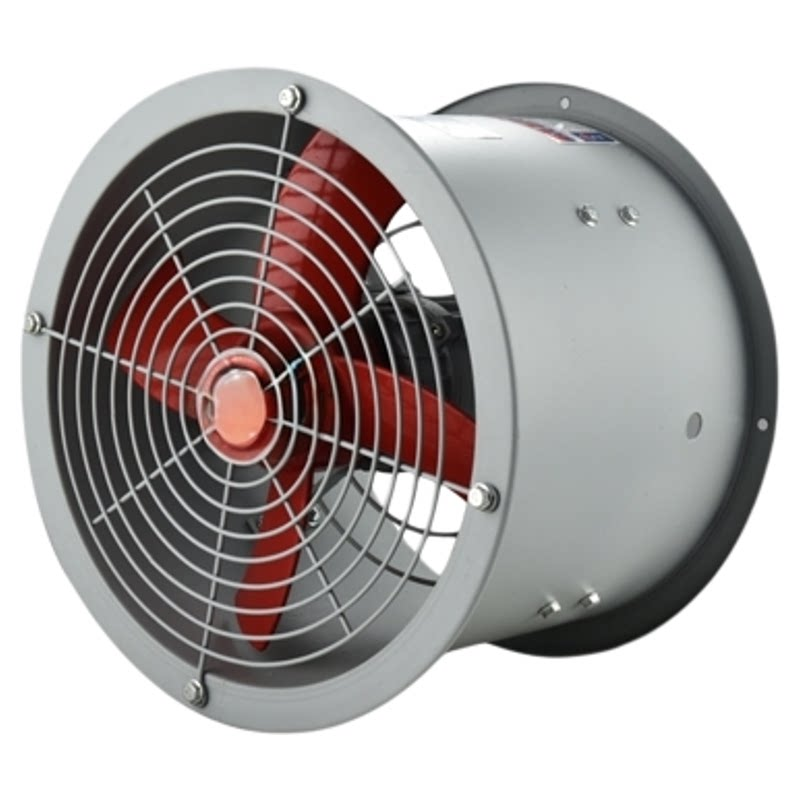
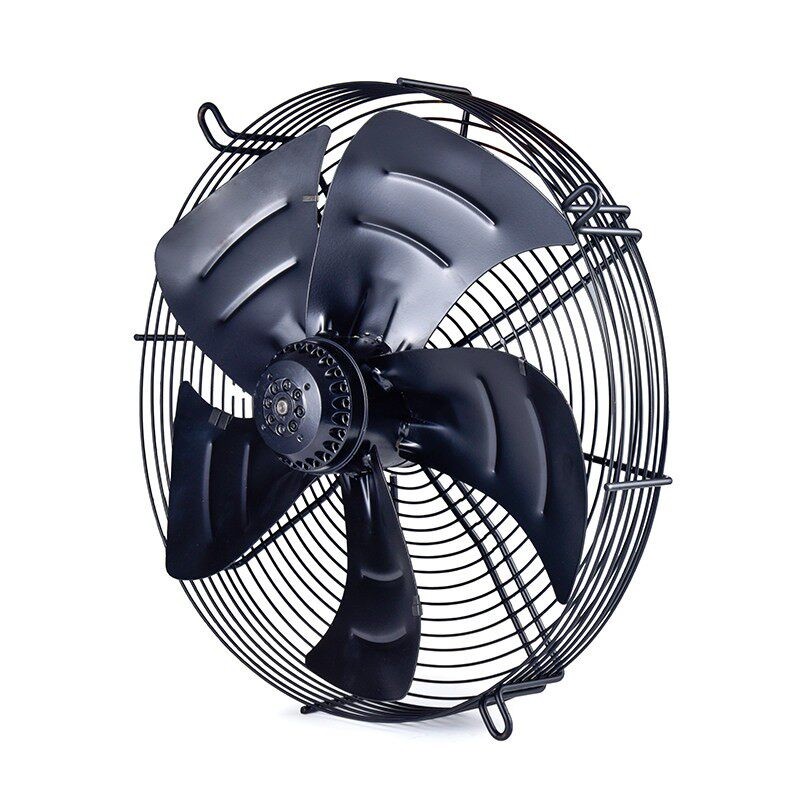
An industrial axial fan moves air along its shaft. It can suit a room, a wall opening, or a short duct path. The 304 Stainless Steel Axial Fan 200°C for Drying Rooms is one catalog option for an industrial hot air blower heater drying area. Its record gives a temperature rating up to 200°C. The Aluminum Blade Axial Fan 39,000 m³/h for Tobacco Curing is another axial option. It is for high-volume air movement.

For an industrial hot air blower heater room, check where the fan sits. The air in a chamber may be hotter than the air near the motor. Do not use a heater setpoint alone. Check the heat at the fan. Check the wet air level too. A drying room may have high heat and high moisture at the same time. That can change the fan choice.

  • Use an industrial axial fan when the air path is direct and the pressure loss is low.
  • Check the industrial axial fan temperature limit at its real mounting point.
  • Plan air inlets and outlets so air can move through the whole space.
  • Keep guards and service access in the site plan.

Use Centrifugal Fans for Pressure Needs

Some industrial hot air blower heater systems have long ducts. They may have bends, filters, dampers, or many outlets. These parts add pressure loss. An industrial axial fan may suit direct paths, but a centrifugal fan may be the better type when pressure is a key part of the duty. The 9-19 High-Pressure Centrifugal Fan is listed with pressure up to 9,200 Pa. The 9-26 High-Pressure Centrifugal Fan is listed for conveying and forced air work.

Do not choose a centrifugal fan just because it has a high pressure figure. For an industrial hot air blower heater duct line, add the loss from each part. Include duct length, size changes, bends, branches, filters, and outlets. Then compare the needed flow and pressure with the fan data. A system curve helps show the real point. A fan that looks large on paper can still be wrong for the installed duct path.

Check Heat, Air, and Material Limits

High-temperature ventilation and an industrial axial fan review need more than a heater rating. Heat can affect the motor, bearings, housing, and cable route. An industrial hot air blower heater project should state the process-air heat and the local air heat around the motor. These values can differ. If the fan is outside the chamber, its motor may see less heat. If it is in the air path, it may see more heat.

High-temperature ventilation also needs a review of the air itself. Tell the supplier if the air has moisture, dust, oil, or corrosive vapor. The 9-19 product record gives limits for its listed medium. Do not assume that one fan fits every hot-air process. The heater, fan, duct, controls, and guards must work as one system.

Send a Useful Inquiry

A good industrial hot air blower heater inquiry gives the team enough facts to start. Send the required air flow, static pressure, air heat, duty cycle, voltage, and a simple sketch. Show the duct route. Mark filters, dampers, and outlets. Say if the job is new or a retrofit. For a retrofit, note the old fan size and connection points.

Ask how the fan can be checked after it is installed. A hard-to-reach industrial axial fan can make simple cleaning slow. In a high-temperature ventilation job, safe access matters. Use the four catalog items as a first step. Two are industrial axial fan options for direct air flow. Two are centrifugal options for pressure-led work. An industrial hot air blower heater system should be chosen from its whole duty, not from one headline number.

Industrial Hot-Air Fan FAQ

Questions for a heated-air airflow project.

Is a blower heater the same as a fan?

Not always. An industrial hot air blower heater system can have a heat source, controls, ducts, and an industrial axial fan. The listed products are fan options for the air-moving part. First define if the industrial axial fan must move air in a room, push air through ducts, or remove wet air. The heat source and the fan must be checked together. The final system review should cover heat, air flow, pressure, safety, and the site layout.
A centrifugal fan can suit an industrial hot air blower heater line with long ducts or high resistance. Bends, filters, branches, and outlets add pressure loss. The listed 9-19 and 9-26 products are starting points for pressure-led work. Give the target air flow and the total static pressure for review. Also provide air heat, medium, voltage, and the duct plan. A high pressure rating alone does not prove that an industrial axial fan fits the site.
For an industrial hot air blower heater inquiry, send target air flow, pressure, air heat, local motor heat, duct size, voltage, and duty cycle. Add a sketch of the air path. Say if the air has dust, water vapor, oil, or corrosive vapor. State if the job is new or a retrofit. This data helps compare axial and industrial axial fan and centrifugal fan options. It also helps identify a high-temperature ventilation limit before a final selection is made.
An industrial axial fan can be considered for an industrial hot air blower heater drying area when the air path and pressure need suit the product. The catalog includes a 304 Stainless Steel Axial Fan 200°C for Drying Rooms and an Aluminum Blade Axial Fan 39,000 m³/h for Tobacco Curing. Check the real air heat, humidity, air flow, mounting point, and duct resistance. High-temperature ventilation needs the right limit at the fan, not only the heater setting.

Related article

How to eliminate fan blower vibration during ventilation duct installation work?

24

Oct

How to eliminate fan blower vibration during ventilation duct installation work?

Identifying Root Causes of Fan Blower VibrationMechanical Imbalance and Bearing Degradation in Fan BlowersMechanical imbalance—often caused by dirt, ice, moisture, or blade damage—alters mass distribution in the rotating assembly, generating a domina...
View More
Centrifugal blower noise reduction modification meets indoor workplace standards.

25

Oct

Centrifugal blower noise reduction modification meets indoor workplace standards.

Understanding Centrifugal Blower Noise Sources and Workplace ImpactAerodynamic, mechanical, and structural origins of centrifugal blower noiseCentrifugal blower noise arises from three interdependent sources: aerodynamic, mechanical, and structural. ...
View More
How to Choose a Reliable Centrifugal Fan Manufacturer in China (2026 Buyer's Guide)

14

Sep

How to Choose a Reliable Centrifugal Fan Manufacturer in China (2026 Buyer's Guide)

A practical 2026 buyer's guide to choosing a trustworthy centrifugal fan manufacturer: certifications, quality control, SS304 materials, OEM support, MOQ and delivery.
View More
Industrial Ventilation Fan Selection Guide: Axial vs Centrifugal vs Mixed Flow

14

Sep

Industrial Ventilation Fan Selection Guide: Axial vs Centrifugal vs Mixed Flow

Compare axial, centrifugal and mixed flow industrial ventilation fans by pressure, airflow and noise, and learn how to buy direct from a factory.
View More

Get a Free Quote

Our representative will contact you soon.
Email
Mobile/WhatsApp
Name
Company Name
Message
0/1000