Define the Fan Air Blower Duty
A fan air blower needs a clear duty. List air flow, static pressure, air heat, gas type, dust level, voltage, space, and duct plan. A fan air blower in open air does not face the same load as one in a long duct. Bends, filters, hoods, dampers, and process gear add static pressure. Do not select a fan air blower from air flow alone.
For a new site, set the duty point first. For a replacement, check the duct run and work state. Ask if a filter or added duct will change the load. Good records help a supplier compare a fan air blower with the site need.
Compare Axial and Centrifugal Types
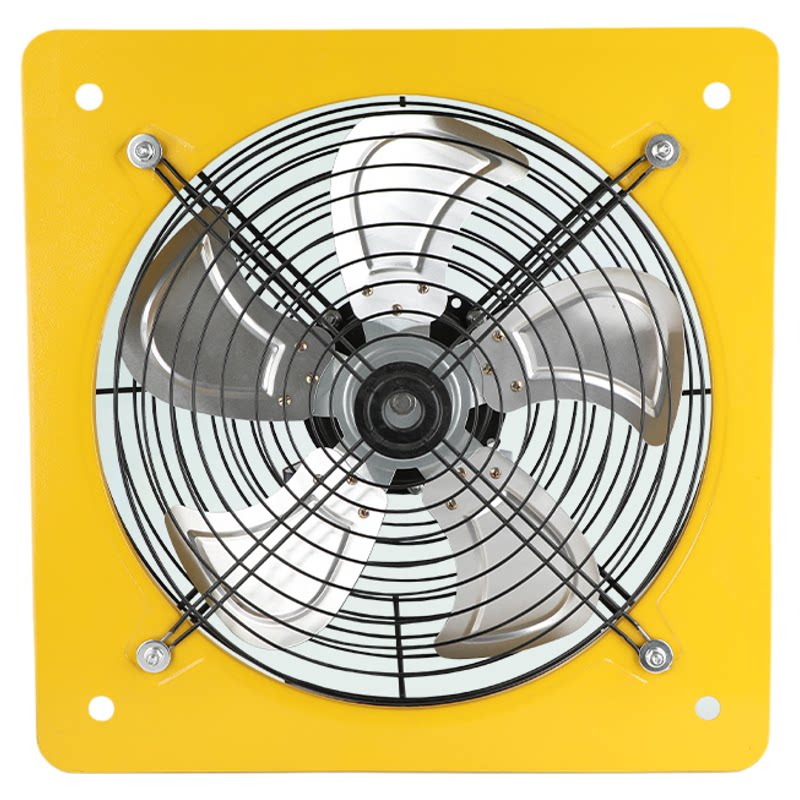
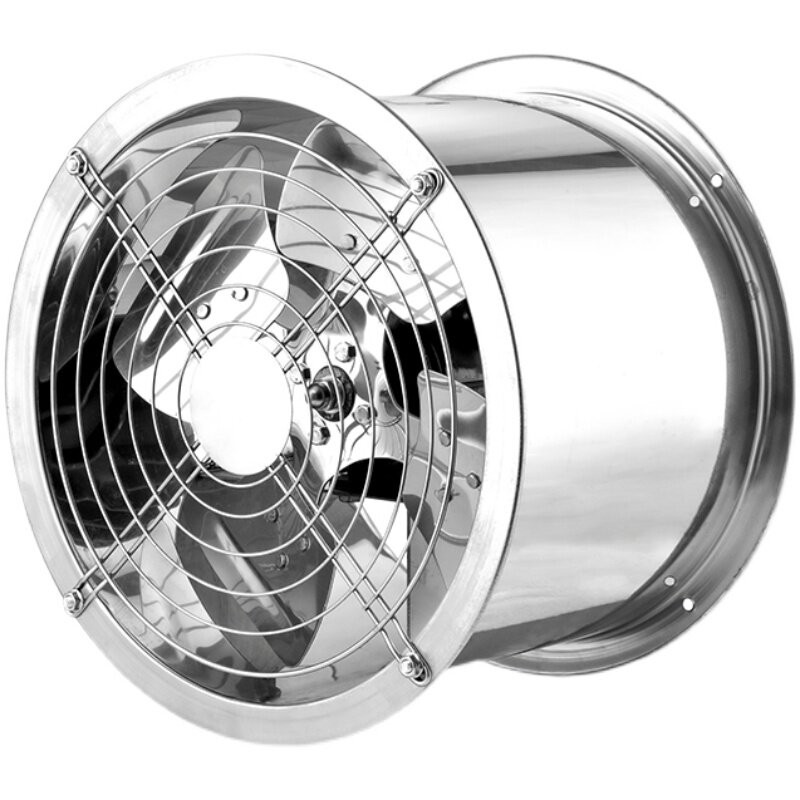
An axial fan sends air in line with its shaft. It can fit a low-load path. The selected 304 stainless steel axial model is a fan air blower for drying rooms. Its record lists 2,100–39,000 m³/h, 304 stainless steel, a 200°C rating, and F-class or H-class motor insulation. Check the exact model before an order.
A centrifugal fan turns air through its impeller and case. It can suit ducts or gear that add load. Centrifugal fan selection starts with system pressure and air state. The selected 11-62 unit is listed for hotel kitchens. The 4-72A and 9-26 units are listed for chemical air and conveying. Each fan air blower has a different task.
Use an Industrial Ventilation Fan for the Right Load
An industrial ventilation fan must match air volume and system load. The 11-62 unit lists up to 20,000 m³/h, up to 1,000 Pa, and noise below 65 dB(A). Review it for hotel kitchen work when the stated limits fit. An industrial ventilation fan still needs the right duct size, fan point, and motor power.
Centrifugal fan selection can move to a higher-pressure range for a restrictive path. The selected 4-72A is listed up to 2,500 Pa. The selected 9-26 is listed up to 9,200 Pa. These are product figures, not site results. A fan air blower must match the actual system curve. Use air flow and pressure together. This fan air blower review should use both values.
Check Air, Heat, and Material Limits
Air state can rule out a model. The 4-72A record lists 304 stainless steel, a maximum gas heat of 80°C, and a dust and hard-particle limit of 150 mg/m³. It is listed for air and non-self-igniting, non-corrosive gases. It does not permit viscous matter. An industrial ventilation fan needs these limits checked before service.
The selected 9-26 record also lists an 80°C maximum medium heat and a 150 mg/m³ dust limit. It is listed for suction and blowing. Centrifugal fan selection should include the actual gas, heat range, and particle load. Do not use a general fan air blower label in place of this data.
Plan the Site Layout
More pressure is not always the right answer. A high-pressure fan air blower may fit a conveying line or hard duct path. A low-noise centrifugal model may fit a hotel kitchen where sound matters. Centrifugal fan selection also includes motor space, access, duct links, vibration control, and filter access.
For an industrial ventilation fan in a ducted site, plan the fan with the full air path. Include transitions, support, filters, and safe access. This gives the supplier useful facts for a fan air blower discussion.
Send the Core Project Facts
For a quote, send the use case, air flow, static pressure, air heat, gas or air type, dust level, voltage, duct size, and site sketch. State if the fan air blower is for drying-room air, kitchen exhaust, chemical air, or conveying. Taizhou Zicheng Electromechanical Co., Ltd. records axial fans, centrifugal fans, kitchen exhaust fans, and vortex blowers.
Use the same fact set for each industrial ventilation fan comparison. This keeps centrifugal fan selection clear and supports a fan air blower choice based on site data.

 EN