Industrial Roof Exhaust Fans | Fan Selection

Get a Free Quote

Our representative will contact you soon.
Email
Mobile/WhatsApp
Name
Company Name
Message
0/1000
Industrial Roof Exhaust Fans for Project Ventilation

Industrial Roof Exhaust Fans for Project Ventilation

Industrial roof exhaust fans move used air out at roof level. They can help with heat, fumes, or stale air in a plant. Industrial roof exhaust fans need a clear duty point before a buyer chooses a model. State the air flow, duct path, pressure loss, air heat, and power supply. Duct bends, filters, dampers, and roof parts can change the result. The listed products are centrifugal fan options for ducted work. They are not claimed as exact roof units. Taizhou Zicheng Electromechanical makes axial and centrifugal fan types. Industrial roof exhaust fans should be reviewed with the full site data. Send the duty point, material need, voltage, and layout for a model discussion and quote. Industrial roof exhaust fans need the same clear data on every project. Industrial roof exhaust fans should be selected for the actual site.
Get A Quote

Manufacturer Context for Industrial Projects

Context for buyers who need an industrial fan source.

Direct Factory Production

Taizhou Zicheng Electromechanical is documented as a maker, not a trading firm. Industrial roof exhaust fans can be discussed with the factory source. This gives the buyer a direct path for product and quality questions. Industrial roof exhaust fans can be reviewed with direct product questions.

Broad Fan Product Coverage

The documented range has axial types, CF-11 and 11-62 centrifugal types, and PCF Series smoke exhaust types. Industrial roof exhaust fans may need a different layout, so the range supports a focused model discussion. This helps when industrial roof exhaust fans are part of a wider ventilation plan.

Related products

Match Pressure to Duct Resistance

Match Pressure to Duct Resistance

Industrial roof exhaust fans need pressure as well as air flow. Long ducts, bends, filters, dampers, and roof changes add drag. That drag moves the fan duty point. Centrifugal options can suit ducted work when the curve fits the measured system. Check the curve, inlet air, and layout before a final choice. Industrial roof exhaust fans should be checked at the real duty point.

Set the Duty Point First

Industrial roof exhaust fans should start with the job, not a nameplate flow number. The job may be room air change, heat removal, fume capture, or dust control. Write down the flow needed at the pickup point. Then map the full path to the roof. Include hoods, branches, ducts, filters, dampers, and the roof outlet. Industrial roof exhaust fans work at a point set by both flow and pressure.

Ask for the pressure loss at the required flow. A fan can move a lot of air in free air. It may move less air once a long duct and filter are in place. This is why industrial roof exhaust fans need a system curve check. It is also useful to allow for filter loading if the system has filters. Industrial roof exhaust fans should have a stated flow and pressure target. Industrial roof exhaust fans need a duct route that is easy to review. Industrial roof exhaust fans may need a filter-loss check. Industrial roof exhaust fans should be matched to the operating point.

Keep the Product Boundary Clear

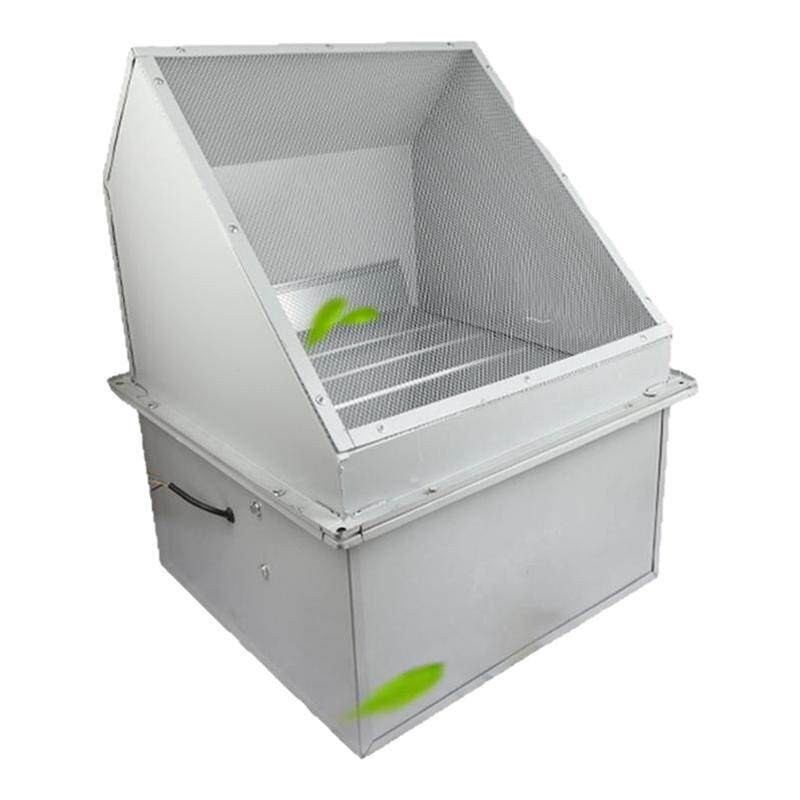
The products on this page are the closest published centrifugal choices. They are not sold here as exact roof fan units. Industrial roof exhaust fans may need a weather hood, curb size, drain path, outlet form, motor position, and safe access for service. Those roof details must be checked apart from fan pressure data.

  • Industrial roof exhaust fans with a short open path may use an axial form if its curve fits the duty point.
  • Industrial roof exhaust fans with long ducts or filters may need a centrifugal option because pressure matters.
  • Do not choose the highest pressure rating by default. Match the curve to the real system.
  • Check the air, the site, and the roof layout before you choose a housing material.

Check the Air at the Fan Inlet

Industrial roof exhaust fans must suit the air they move. The listed 4-72A products state a maximum gas heat of 80°C. They also state a dust and hard-particle limit of 150 mg/m³. Their stated air limit is non-self-igniting and non-corrosive gas. The stainless 4-72A has a 304 stainless steel housing for its stated use. It still needs a review of the air, heat, and dust level.

Roof work adds more checks. Look at rain, wind, drain paths, motor heat, vibration, and service access. Industrial roof exhaust fans are not a default answer for flammable, explosive, or unknown vapors. Such work needs an application review. Industrial roof exhaust fans should be reviewed for the air they handle. Industrial roof exhaust fans need a site check when the air is hot or wet. Industrial roof exhaust fans should not be used for unknown vapors without review.

Use the Fan Curve

A simple duct sketch is useful for industrial roof exhaust fans. Show duct size, run length, elbows, changes in size, hood, filter, and roof exit. This makes it easier to see if the problem is flow or pressure. Added bends and dirty filters can raise drag after a system is built.

The 4-72A records list up to 2,500 Pa and up to 20,000 m³/h. The 9-19 and 9-26 records list up to 9,200 Pa and up to 7,000 m³/h. These are limits in separate records. They do not mean one model makes both limits at the same point. Industrial roof exhaust fans need a check of the proposed curve, motor, and power supply. Industrial roof exhaust fans need a curve check before a buyer approves the fan. Industrial roof exhaust fans should have the right motor and power supply. Industrial roof exhaust fans need a clear install plan.

Send Complete Project Details

Good data makes an industrial roof exhaust fan request more useful. Send the required flow, target pressure, duct sketch, air heat, dust level, moisture, voltage, frequency, and roof limits. State if you need a standard model review or a non-standard discussion. Taizhou Zicheng Electromechanical can review flow, pressure, material, and voltage details before a product path is discussed.

Industrial Roof Exhaust Fan FAQ

Selection questions for roof-level industrial exhaust applications.

How should I size a roof exhaust fan?

Size industrial roof exhaust fans with both flow and pressure. First find the flow needed for the room or process. Then add the loss from ducts, elbows, hoods, filters, dampers, and the roof outlet. Check the proposed fan curve at that duty point. Do not rely on a free-air flow value alone. Also confirm inlet air heat, dust, moisture, and the site power supply. These details help show whether the proposed unit fits the real system. Industrial roof exhaust fans need these checks before final selection.
No. The four products shown are published centrifugal choices that are close to this industrial exhaust topic. They are not claimed as exact industrial roof exhaust fans. A roof unit may need a curb, weather cover, outlet form, motor layout, and service access that are not in those product records. Use the records for a first pressure discussion. Then ask the supplier to review the roof layout and confirm whether a standard product or another configuration is needed.
Static pressure matters when industrial roof exhaust fans serve long ducts, many bends, filters, hoods, or tight outlet parts. Each item adds drag. That drag can lower the air flow at the installed point. The 4-72A records list up to 2,500 Pa. The 9-19 and 9-26 records list up to 9,200 Pa. Use the curve for the exact model. Do not compare maximum values alone.
For industrial roof exhaust fans, send the required flow, target pressure, duct drawing, roof opening details, air heat, dust level, moisture, and any corrosion concern. Include voltage, frequency, mounting limits, and access needs. Give the pressure loss for filters or hoods when it is known. A photo or simple sketch can help. These facts let the supplier review the system and raise key fit questions before a model discussion or quote. Industrial roof exhaust fans benefit from complete project data.

Related article

Centrifugal blower noise reduction modification meets indoor workplace standards.

25

Oct

Centrifugal blower noise reduction modification meets indoor workplace standards.

Understanding Centrifugal Blower Noise Sources and Workplace ImpactAerodynamic, mechanical, and structural origins of centrifugal blower noiseCentrifugal blower noise arises from three interdependent sources: aerodynamic, mechanical, and structural. ...
View More
6 inch extractor fan power and noise parameters need checking before ordering.

27

Oct

6 inch extractor fan power and noise parameters need checking before ordering.

Why Noise Performance Is Critical for 6 Inch Extractor Fan SelectionA quiet fan is not just a convenience—it determines whether users keep ventilation running. Because a 6 inch extractor fan often operates in bathrooms, kitchens, and laundry rooms, p...
View More
How to Choose a Reliable Centrifugal Fan Manufacturer in China (2026 Buyer's Guide)

14

Sep

How to Choose a Reliable Centrifugal Fan Manufacturer in China (2026 Buyer's Guide)

A practical 2026 buyer's guide to choosing a trustworthy centrifugal fan manufacturer: certifications, quality control, SS304 materials, OEM support, MOQ and delivery.
View More
How to Choose the Right Aquaculture Aerator for Your Fish Farm (2026 Buying Guide)

14

Sep

How to Choose the Right Aquaculture Aerator for Your Fish Farm (2026 Buying Guide)

Paddle wheel, impeller or vortex? Learn how to size a pond aerator, cut energy costs and find a reliable aquaculture aerator manufacturer for your farm.
View More

Get a Free Quote

Our representative will contact you soon.
Email
Mobile/WhatsApp
Name
Company Name
Message
0/1000