Start with the fan duty
Ask centrifugal exhaust fan manufacturers to review the duty point before they quote a model. State the needed airflow, static pressure, duct layout, inlet temperature, medium, voltage, and application. This lets the supplier compare the job with real product limits. It also shows if the job is simple ventilation or a high-resistance exhaust duty. Good centrifugal exhaust fan manufacturers ask these questions before they name a fan.
Airflow alone is not enough. A fan may move much more air in an open test than it does in a duct system. Bends, filters, dampers, and stacks add resistance. They change the operating point. Centrifugal exhaust fan manufacturers need this system data to make a useful selection. Give centrifugal exhaust fan manufacturers the complete route, not only a room size.
Compare pressure with the system
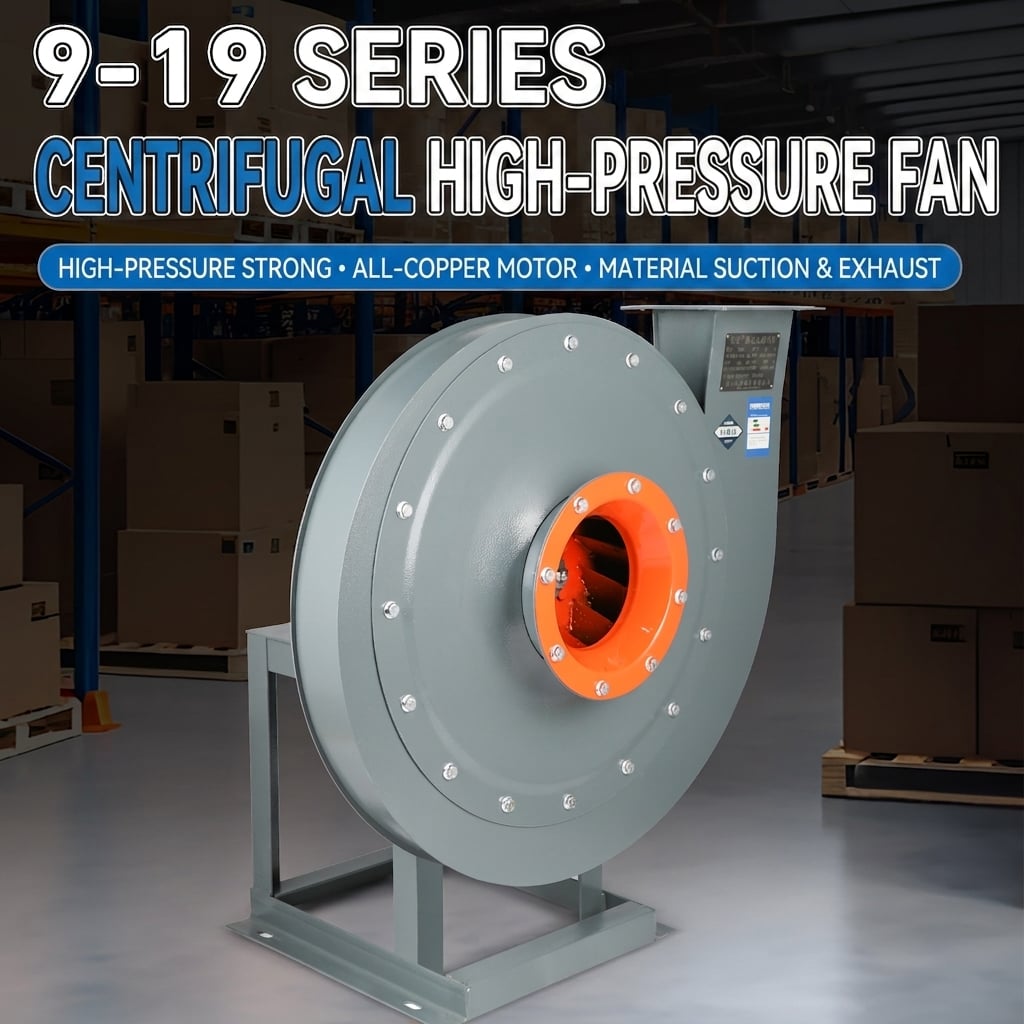
The 9-19 product record lists a maximum total pressure of 9,200 Pa and a maximum airflow of 7,000 m³/h. The 9-26 record also lists up to 9,200 Pa and 7,000 m³/h. It lists motor choices through 30 kW. These high-pressure fans may suit hard ducted work or conveying only when the medium and site conditions meet their stated limits. Centrifugal exhaust fan manufacturers should compare those limits with the actual duty.
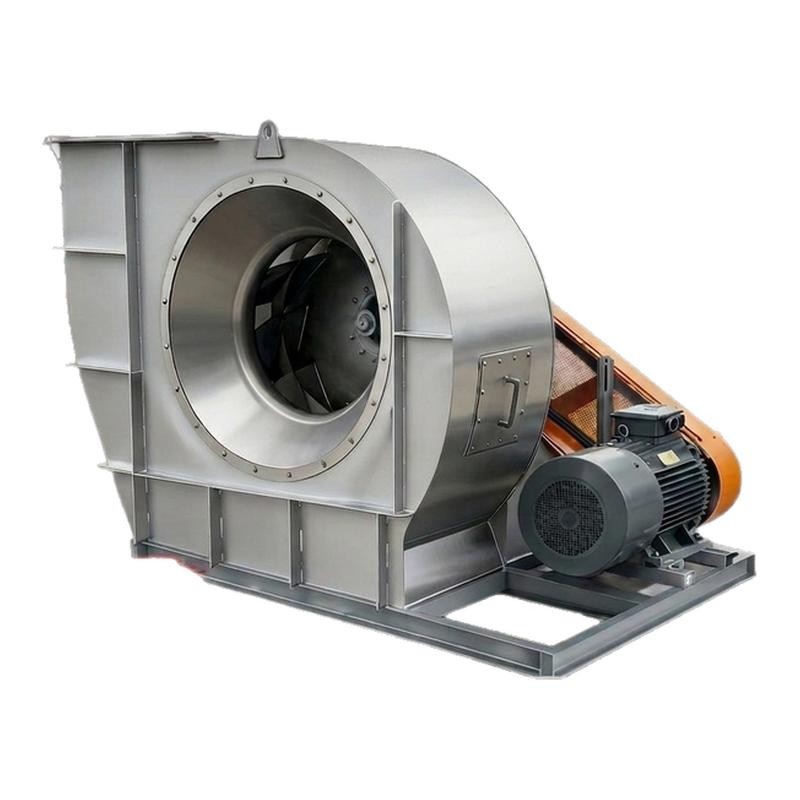
The carbon-steel and 304 stainless 4-72A records list a maximum static pressure of 2,500 Pa and a maximum airflow of 20,000 m³/h. They offer A, B, C, and D structures. This is a different pressure range. It may fit general factory air exchange or medium-pressure ducts. Do not assume that it replaces a high-pressure fan. Centrifugal exhaust fan manufacturers should check the duty point first. Ask centrifugal exhaust fan manufacturers for the product curve used in their review.
Check air and site conditions
Material and gas conditions matter. The 9-19, 9-26, and carbon-steel 4-72A records describe non-corrosive, non-self-igniting, non-viscous media. Their records state an 80°C maximum medium temperature and particle limits. The stainless 4-72A is a separate 304 stainless steel option. It may be worth discussing when moisture or corrosive exposure is a concern. The exact medium still needs supplier review. Centrifugal exhaust fan manufacturers need this information to check fit.
- State the temperature at the fan inlet.
- Describe the dust type and amount.
- Flag corrosive, flammable, or sticky gas.
- Show the duct route, filters, bends, and outlet.
These steps help centrifugal exhaust fan manufacturers avoid a poor match. A general product description cannot replace the details of the actual system. Clear site facts help centrifugal exhaust fan manufacturers give a more focused response.
Review the supplier and request
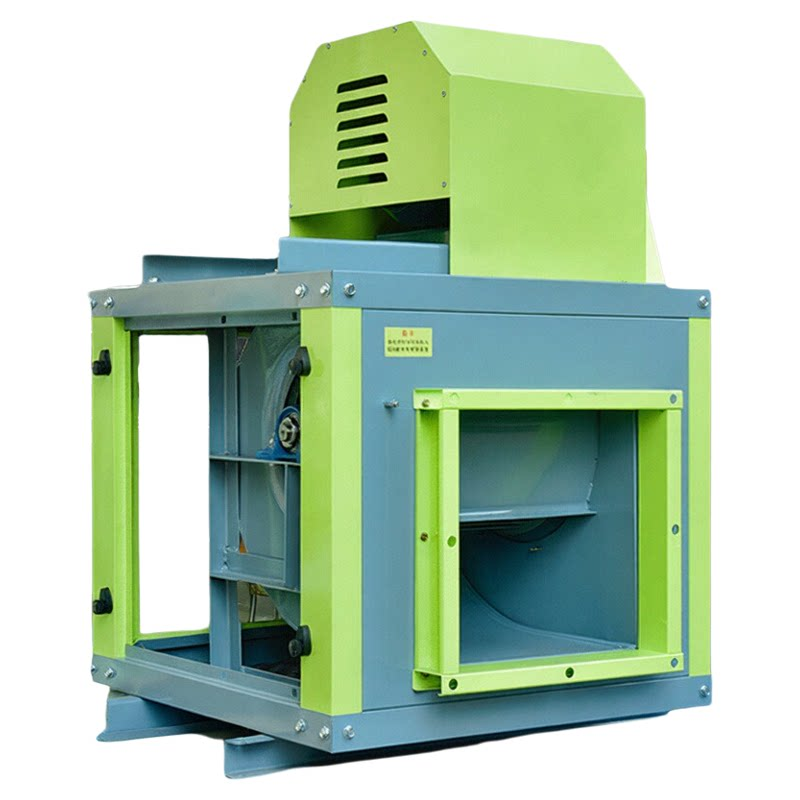
Buyers often check if the supplier is a direct manufacturer, if its product records fit the job, and if it asks about the full duty point. The available profile names Taizhou Zicheng Electromechanical Co., Ltd. as a manufacturer. It documents centrifugal, axial, kitchen exhaust, and vortex blower lines. Its site content says it can discuss airflow, static pressure, material, and voltage before an order. This is useful information for buyers comparing centrifugal exhaust fan manufacturers.
For a project with several zones, list each duty on its own. A conveying line, a factory exhaust branch, and a wet process area can need different fan choices. Ask centrifugal exhaust fan manufacturers to state the catalogue basis, proposed setup, and open questions. This gives the purchasing and install teams a clearer record. It also lets centrifugal exhaust fan manufacturers flag limits before the order.
Send a clear quote request
Include airflow, pressure, process details, medium temperature, material needs, voltage, frequency, quantity, and space limits. Send drawings or resistance data when available. ZICHENG can review whether a listed 9-19, 9-26, carbon-steel 4-72A, or 304 stainless 4-72A product is a starting point. If a standard item does not fit, ask centrifugal exhaust fan manufacturers about the stated non-standard configuration option before placing an order. A clear request gives centrifugal exhaust fan manufacturers the facts needed for review.

 EN