Define the Replacement Scope
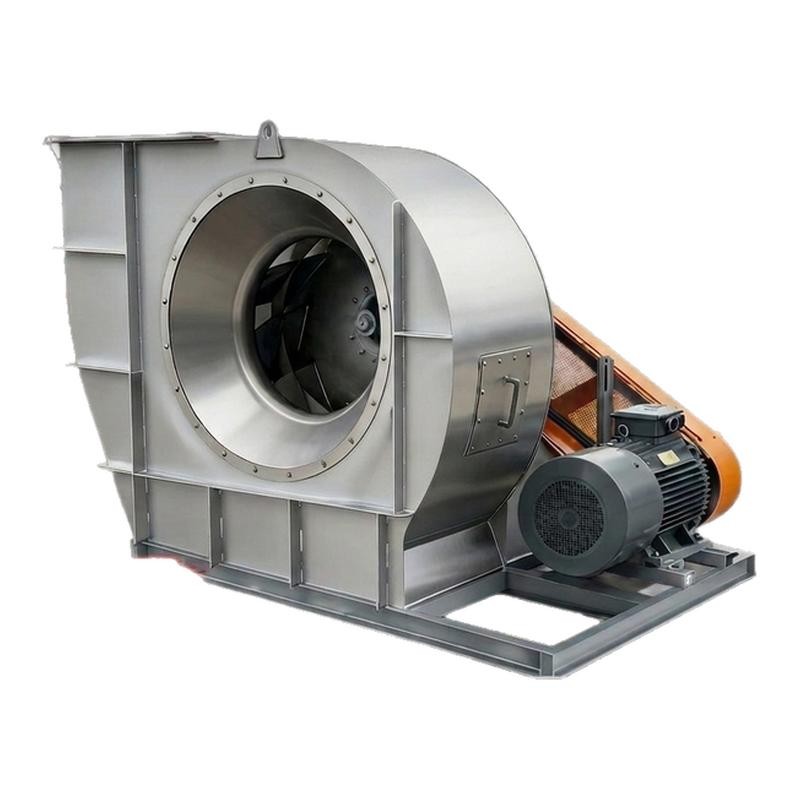
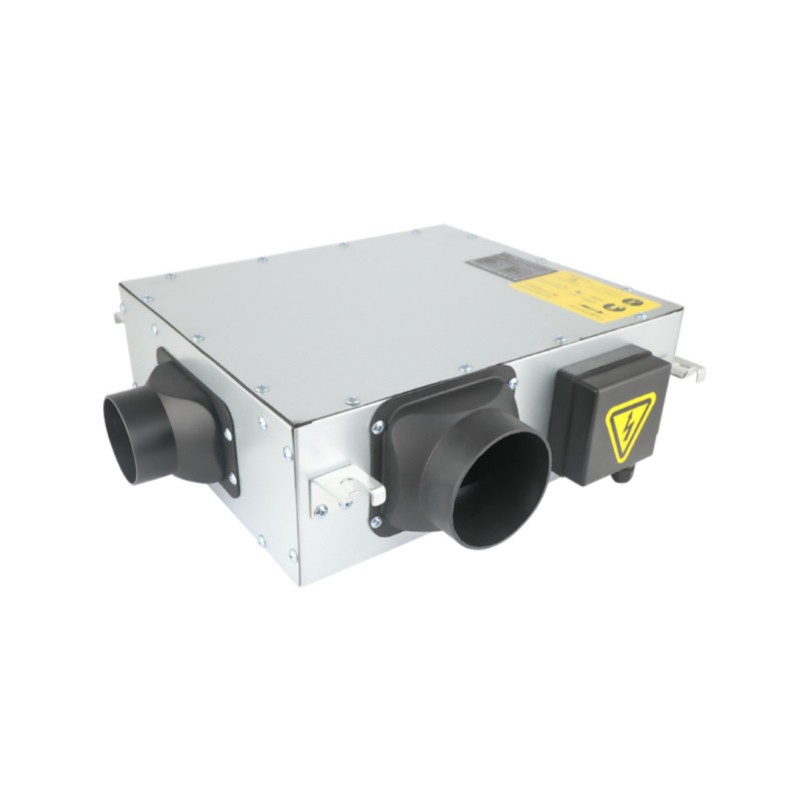
To replace air handler equipment, start by naming the part that must change. A full HVAC air handler can include a blower, coil, filter, drain, cabinet, and controls. The products shown here are centrifugal fans. They are not complete HVAC air-handler assemblies. Use this page when the scope is a fan or an industrial air-moving duty. Do not use a fan as a full air-handler substitute without checking the whole system.
When you replace air handler equipment, ask what the old unit does. Does it supply air, remove air, or move air through a process duct? Which parts stay in place? What must connect to the new component? Clear answers keep the project in scope. They also prevent a buyer from choosing a fan for a job that needs a matched HVAC unit.
Get the Duty Point
To replace air handler fan duty, you need airflow and static pressure. Airflow tells you how much air the system needs. Static pressure tells you how much resistance the fan must overcome. Long ducts, bends, dampers, filters, hoods, and outlets add resistance. A fan that looks right in free air may not give the same airflow after it is connected to the real duct system.
- When you replace air handler equipment, record the needed airflow at the delivery point.
- List the duct length, bends, branches, filters, hoods, and transitions.
- State the pressure needed at the target airflow.
- Record air temperature, dust, moisture, and possible corrosion.
- Confirm voltage, frequency, controls, mounting direction, and service space.
Use the duty point to compare models. The 4-72A options have a stated maximum static pressure of 2,500 Pa. The 9-19 and 9-26 options are high-pressure centrifugal fans with stated maximum pressure up to 9,200 Pa. More pressure is not always better. The selected model must match the fan curve and the system curve at the planned operating point.
Check Air and Site Conditions
When you replace air handler fan duty, inspect the air that will pass through the unit. The selected 9-19 and 9-26 products state limits for non-corrosive, non-self-igniting, non-viscous media. They state a maximum medium temperature of 80°C. They also state a limit of 150 mg/m³ for dust and hard particles. The carbon-steel 4-72A is for non-corrosive air. The selected 304 stainless 4-72A gives another material option for relevant conditions.
These limits guide a first review. They do not prove fit for every site. If the job to replace air handler equipment involves flammable dust, corrosive vapor, high heat, or a hazardous location, request a product and compliance review for that exact condition. Do not assume that a product family name covers the risk.
Check Fit and Power Details
When you replace air handler components, check the mechanical fit before ordering. Compare inlet and outlet position, rotation, flange details, supports, vibration mounts, and access for service. A retrofit may need a duct transition or a new support frame. Plan those parts with the fan. Do not leave them until after delivery.
Also check the power supply. Confirm voltage, phase, protection, starting method, and speed control. The catalog record for the 9-19 fan lists 380 V and a power range from 0.75 kW to 30 kW. That record helps start a discussion. The final configuration still needs to match the site supply and the selected duty point.
Send a Useful Request
To replace air handler fan duty with a catalog option, send a photo of the current label, a duct sketch, target airflow, static pressure, air conditions, voltage, and size limits. State if the request is for an industrial fan component or a complete air-handler unit. This gives the supplier the facts needed to identify the catalog boundary and review a standard or non-standard fan configuration where it fits.
Replacement Request Checklist
Use replace air handler as the request subject. Use replace air handler when you share the equipment label. Use replace air handler when you send site photos. Use replace air handler when you list airflow needs. Use replace air handler when you list pressure needs. Use replace air handler when you describe the duct route. Use replace air handler when you state air temperature. Use replace air handler when you state dust conditions. Use replace air handler when you state material concerns. Use replace air handler when you confirm the supply voltage. Use replace air handler when you explain the control method. Use replace air handler when you show available space. Use replace air handler when you note mounting direction. Use replace air handler when you need service access. Use replace air handler when you describe existing connections. Use replace air handler when the task is fan-only. Use replace air handler when the task includes HVAC parts. Use replace air handler when you need a catalog review. Use replace air handler when you need a custom review. Use replace air handler when you ask about fan curves. Use replace air handler when you ask about system curves. Use replace air handler when you check site conditions. Use replace air handler when you compare fan materials. Use replace air handler when you compare pressure classes. Use replace air handler when you request a quotation. Use replace air handler when you ask for a model discussion. Use replace air handler when you need the scope confirmed.

 EN