Industrial Fan Manufacturers | ZICHENG

Get a Free Quote

Our representative will contact you soon.
Email
Mobile/WhatsApp
Name
Company Name
Message
0/1000
Industrial Fan Manufacturers for Ducted Ventilation Projects

Industrial Fan Manufacturers for Ducted Ventilation Projects

Industrial fan manufacturers should start with the job, not a model name. ZICHENG makes axial fans, centrifugal fans, kitchen exhaust fans, and aeration blowers. The range serves ventilation, smoke extraction, drying, and wastewater treatment work. This page focuses on published centrifugal fans for ducted jobs. It is for engineers, contractors, distributors, and plant teams. Industrial fan manufacturers need clear project data to suggest a suitable option. Send the needed airflow, static pressure, air condition, voltage, and layout. ZICHENG handles design, development, and production in house. The team can review the duty point before it suggests a catalog fan or discusses a non-standard need. Industrial fan manufacturers need a clear brief. Industrial fan manufacturers can then review the job. Industrial fan manufacturers can respond with relevant options. Use the inquiry form to share your project facts and request a quote.
Get A Quote

Manufacturer Context for Fan Buyers

Verified company and range facts for supplier review.

Direct Production Source

ZICHENG is a manufacturer, not a trading company. Design, development, and production are handled in house. Industrial fan manufacturers with direct production can discuss products and project needs with buyers.

Multi-Type Fan Portfolio

The documented range includes axial fans, centrifugal fans, kitchen exhaust fans, and aeration blowers. Industrial fan manufacturers may help buyers compare fan types for a project with more than one zone.

Standard and Custom Paths

Standard catalog models and non-standard needs are supported from the same production base. Industrial fan manufacturers need the duty point, material needs, and electrical details before a project review.

Related products

Match Pressure to Duct Resistance

Match Pressure to Duct Resistance

Industrial fan manufacturers should match the fan curve to the system curve. Airflow alone is not enough. The catalog range includes high-pressure 9-19 and 9-26 models and general 4-72A models. Industrial fan manufacturers need the full duct layout. Industrial fan manufacturers use it to assess resistance because bends, filters, and duct length all add resistance.

Start With the Airflow Need

Industrial fan manufacturers need a clear airflow target. Start with the air volume needed at the point of use. A room size alone may not give enough detail for a ducted job. Heat, dust, equipment layout, and the number of air points can change the need. For a new job, list each zone. State if it needs supply air, exhaust air, or both. For a replacement, include the old model and explain the problem.

Industrial fan manufacturers also need to know when the system will run. State if the load stays steady or changes during the day. Give the location of hoods, branches, and discharge points. A simple drawing can help. This data gives a better base for fan selection than a request based only on a motor size.

Use Static Pressure With Airflow

Industrial fan manufacturers should review airflow and static pressure together. Static pressure is the force needed to move air through the system. Long ducts, elbows, dampers, filters, and transitions add resistance. If pressure is too low, the fan may not move enough air at the point of use. This can happen even when the free-air rating looks high.

  • List duct size and length for each air path.
  • Show elbows, branches, hoods, dampers, and filters.
  • State if filters load with dust during use.
  • Give the required airflow at the actual work point.

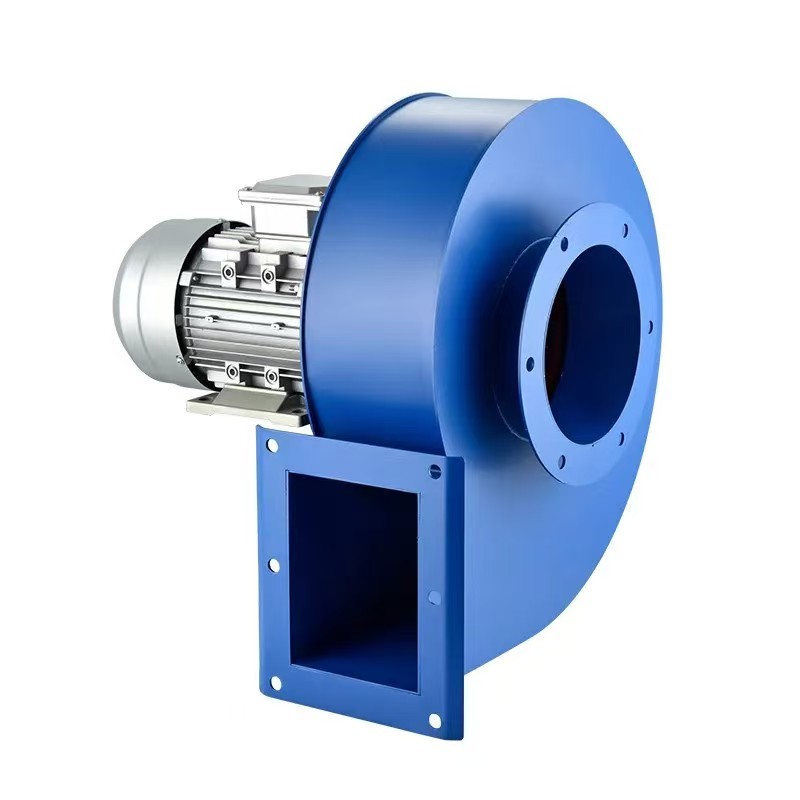
Industrial fan manufacturers can use these facts to compare the duty point with a fan curve. The 9-19 and 9-26 products on this page are high-pressure centrifugal fan options. The 4-72A products are centrifugal fan options for general ducted ventilation. A maximum rating is not the same as the best normal operating point.

Check the Air Stream and Site

Industrial fan manufacturers need facts about the air stream. The published 9-19 and 9-26 products are for non-corrosive, non-self-igniting, non-viscous media. Their published limits include a medium temperature of 80°C and dust or hard particles at or below 150 mg/m³. These are product limits. They do not apply to every fan or every job.

Tell industrial fan manufacturers if the stream has corrosive vapor, combustible material, high moisture, or unusual heat. The published range includes a carbon-steel 4-72A model for factory use and a 304 stainless-steel 4-72A model for chemical applications. The right material depends on the real environment. Industrial fan manufacturers should review the process before they suggest a fan. Industrial fan manufacturers should not assume a general fan fits every process.

Review Power and Installation Details

Industrial fan manufacturers need electrical and site details early. Confirm voltage, frequency, motor power, mounting space, duct direction, and service access. The 9-19 product page lists 380 V and a power range from 0.75 kW to 30 kW. The final choice still depends on the duty point. The 4-72A range has several structural variants. The layout should be checked before the model is chosen.

Industrial fan manufacturers can review a standard option first. They can also discuss a non-standard need when the project facts are clear. Industrial fan manufacturers need a complete brief. Industrial fan manufacturers can use it to check the product range. Industrial fan manufacturers can then discuss the next step. Share a drawing, airflow, pressure, air condition, voltage, and site limits. This gives the supplier a useful base for a technical response and quotation.

Industrial Fan Manufacturer FAQ

Questions to prepare before requesting a fan selection or quotation.

What data should I send to a fan manufacturer?

Industrial fan manufacturers need the required airflow, static pressure, duct layout, air temperature, dust or vapor details, power supply, and site space. For a replacement, send the current model and state the issue. A photo and a simple duct drawing also help. Industrial fan manufacturers can then compare the duty point with product limits and a fan curve. Do not use only fan diameter or motor power as the basis for a request. Those facts do not show the full resistance of the installed system.
Industrial fan manufacturers may suggest axial or centrifugal fans based on the job. Axial fans are often considered for high air volume through a more open path. Centrifugal fans are often reviewed for ducted systems with bends, filters, long runs, or process resistance. The right type depends on the duty point. Industrial fan manufacturers should review airflow and static pressure together. Then the buyer can check the relevant curve, construction, and product boundary with the supplier.
Industrial fan manufacturers use static pressure to assess system resistance. Duct length, elbows, filters, dampers, hoods, and transitions can all raise it. If the pressure estimate is too low, a fan may not deliver the required airflow at the work point. Industrial fan manufacturers can make a better review when the inquiry includes the layout and known pressure losses. Industrial fan manufacturers should check the final option against its performance curve and the actual installation conditions. Industrial fan manufacturers should also review the site details.
A catalog fan can be a starting point if its published range fits the project. ZICHENG states that it supports standard models and non-standard requirements from the same production base. Industrial fan manufacturers still need to review the duty point, power supply, mounting limits, material needs, and air conditions. Share those facts before treating a change as available. This review can also show whether a published product already fits the job without a change.

Get a Free Quote

Our representative will contact you soon.
Email
Mobile/WhatsApp
Name
Company Name
Message
0/1000