Start With the Duty Point
Industrial blower fans need a clear duty point. Start with the airflow the system needs. Then list the static pressure at that flow. Static pressure is the force needed to move air through the full system. Industrial blower fans also need a known inlet condition. Record the gas type, temperature, dust level, voltage, and available space. These facts help a supplier compare options. They also help avoid a choice based on peak airflow alone.
For a replacement job, inspect the existing route. Note added filters, new bends, branches, dampers, and process machines. Each part can add resistance. Industrial blower fans may then run at a different point from the old design. A short duct may need a different choice from a long duct. A simple duct sketch is useful. It gives industrial blower fans a clearer system context during review.
Compare the Catalog Options
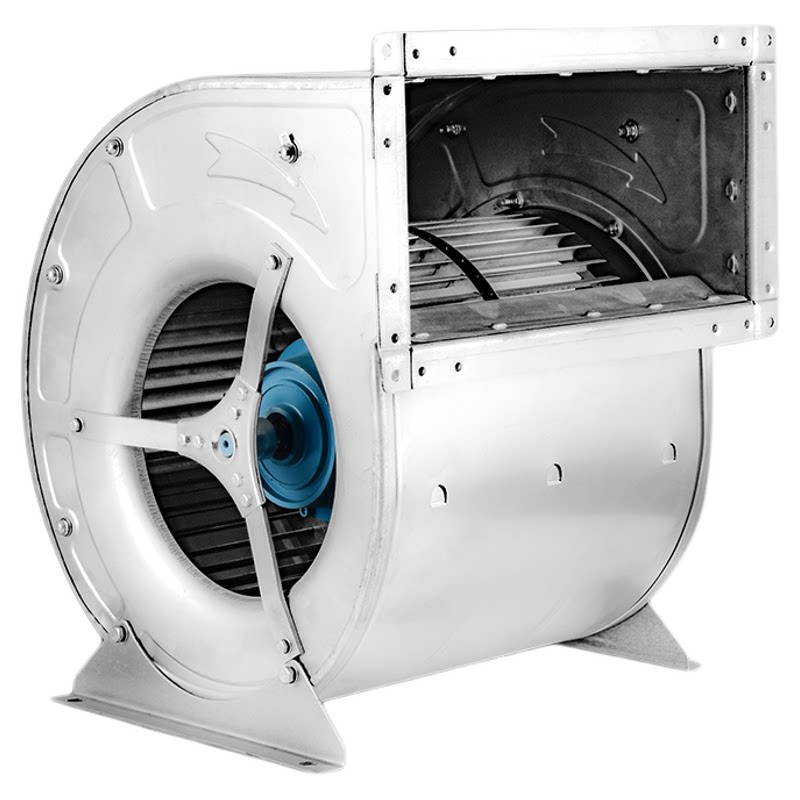
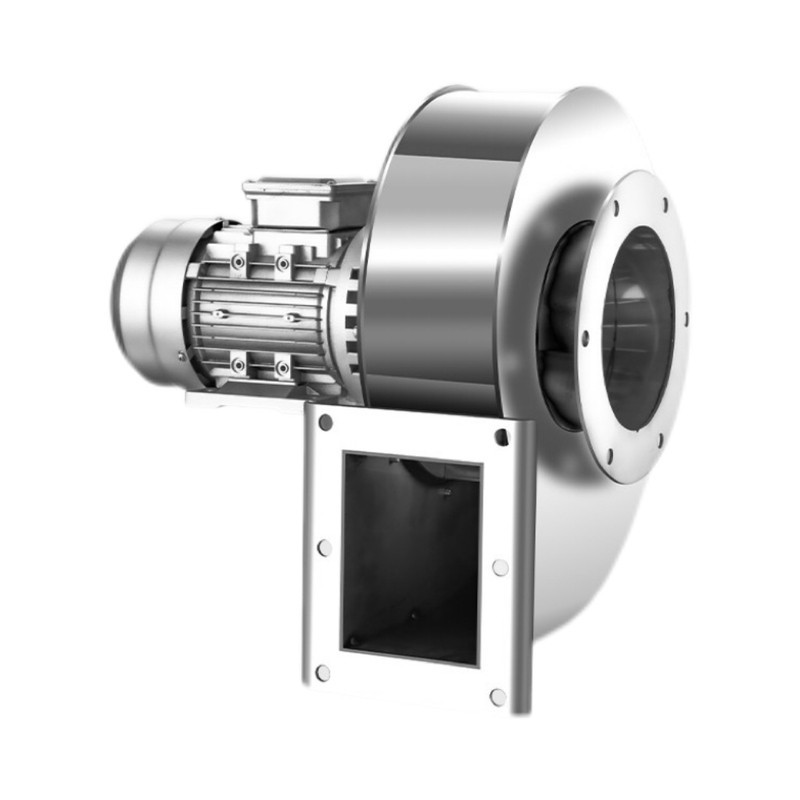
The current catalog has 9-19 and 9-26 high-pressure centrifugal fans. Their product records state a maximum total pressure of 9,200 Pa and maximum airflow of 7,000 m³/h. These industrial blower fans are listed for pressure-demanding ventilation and conveying work. The records state limits for the medium. The gas must be non-corrosive, non-self-igniting, and free of viscous substances. Check the stated temperature and particle limits before use. These industrial blower fans should remain inside those stated limits.
The catalog also has a carbon steel 4-72A fan. Its record states a maximum static pressure of 2,500 Pa and maximum airflow of 20,000 m³/h. A 304 stainless 4-72A option is also listed. Industrial blower fans with these names are not the same product. Material, pressure need, and gas condition all matter. Do not treat a stainless housing as proof that every process gas is suitable.
Check the Site Before Selection
- Measure gas temperature at the fan inlet during the hottest planned condition.
- List dust, hard particles, moisture, and viscous material in the airstream.
- Record duct size, bends, filters, and the discharge point for industrial blower fans.
- Check voltage, motor limits, mounting space, and inlet and outlet direction.
Use the System Curve
Industrial blower fans work with the system, not by themselves. Each duct part creates pressure loss. That loss can reduce the airflow at the work area. Compare the fan curve with the system curve at the required flow. This is useful for dust collection, process exhaust, conveying, and long duct runs. If site data is missing, identify the main loss points before final selection.
More pressure is not always better. An oversized unit can affect noise, power use, and control. A low-pressure unit may not meet the airflow need after filters load. Industrial blower fans should match the expected flow and static pressure. The comparison must also keep within each product’s stated limits.
Send Clear Project Details
For a review of industrial blower fans, share airflow, static pressure, medium, temperature, dust condition, voltage, and fan duty. State whether the fan will supply air, exhaust air, or provide conveying air. Add a duct sketch when possible. Taizhou Zicheng can compare these details with the listed 9-19, 9-26, and 4-72A options. This supports a focused discussion instead of assuming one industrial blower fan fits every job.

 EN