Start With the Duty Point
Choose a high pressure centrifugal fan from the duty point. The duty point is the airflow you need at the pressure of the full system. A high pressure centrifugal fan may move a lot of air in open space. It may move less air after it is linked to ducts and equipment. Record the airflow, static pressure, duct size, duct route, bends, filters, dampers, hoods, and downstream equipment. Use these details to compare the fan curve with the system curve.
System resistance can change over time. A filter can load with dust. A retrofit can add a bend. A new process tool can change the air path. This does not always show a fan fault. It can mean that the duty point has moved. Check these changes before you select a high pressure centrifugal fan. This step helps you avoid a fan that is too small for the work or too large for the system. It also helps you explain the job clearly when you request a high pressure centrifugal fan quote.
Compare the Pressure Classes
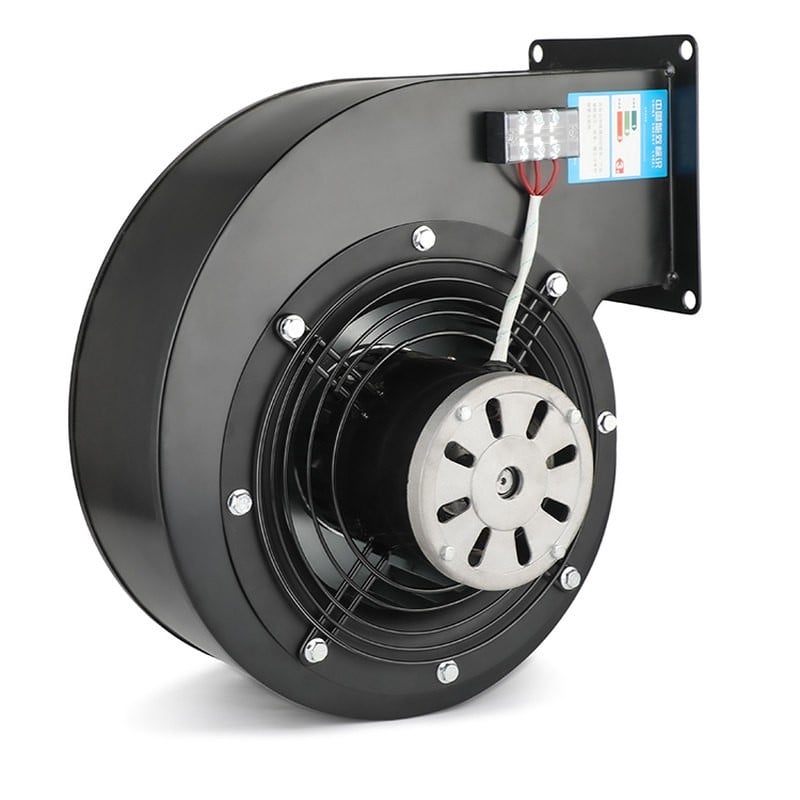
The selected catalog has two high-pressure products: the 9-19 and the 9-26. Each record lists pressure up to 9,200 Pa. It also has two 4-72A products. Each of those records lists pressure up to 2,500 Pa. These product families are not the same. A high pressure centrifugal fan may fit a job with a high resistance duct, a conveying line, or a process need for more pressure. A 4-72A fan may fit general industrial ventilation within its stated range. The high pressure centrifugal fan choice should follow the actual required pressure.
- Start with the required static pressure at the required airflow.
- Check the correct fan curve, not only the maximum listed value.
- Count resistance from filters, bends, ducts, and transitions.
- State if the high pressure centrifugal fan will supply air, exhaust air, or support conveying.
Check the Air and Site Conditions
A high pressure centrifugal fan must also suit the air it will move. The 9-19 and 9-26 records describe non-corrosive, non-self-igniting, non-viscous media. They list a maximum medium temperature of 80°C. They also list dust and hard particles at or below 150 mg/m³. The carbon-steel 4-72A record gives similar limits for its stated use. The 304 stainless 4-72A is a catalog option when 304 stainless construction is specified. The final choice still depends on the real gas and site conditions.
Measure the inlet condition at the fan. Do not use only a general room reading. In a hot area, the inlet air can be hotter than the normal room air. In a dusty system, identify the particle level. If the medium is corrosive, flammable, self-igniting, viscous, or unknown, do not assume that a standard high pressure centrifugal fan will fit. Send the process details for review. The site review should state why the selected high pressure centrifugal fan matches the medium.
Check Power and Electrical Supply
Match motor power to the selected fan curve and duty point. The 9-19 record lists motor options from 0.75 kW to 30 kW and a 380 V setup. The 9-26 record also lists 0.75 kW through 30 kW. The carbon-steel 4-72A record lists 0.75 kW through 5.5 kW. The stainless 4-72A record lists options through 15 kW and 380 V supply. These ranges help you compare families. They do not replace curve-based selection.
Before you request a quote for a high pressure centrifugal fan, confirm voltage, frequency, phase, mounting position, inlet and outlet connections, and service space. In a replacement job, record the measured airflow and pressure if you can. Also check the old fan’s connection size and rotation needs. A similar motor rating does not always give the same system result. State the electrical supply with every high pressure centrifugal fan inquiry.
Send a Useful Inquiry
Give the supplier the details needed to review the job. Include airflow, total static pressure, medium, inlet temperature, dust level, run hours, power supply, duct layout, and site limits. Add drawings or photos when available. Taizhou Zicheng Electromechanical Co., Ltd. says it can support airflow and static-pressure sizing, model selection, material advice, and voltage advice before an order. Clear input helps keep the proposed high pressure centrifugal fan tied to the real installation. A clear high pressure centrifugal fan inquiry makes the review more useful.

 EN