
 EN



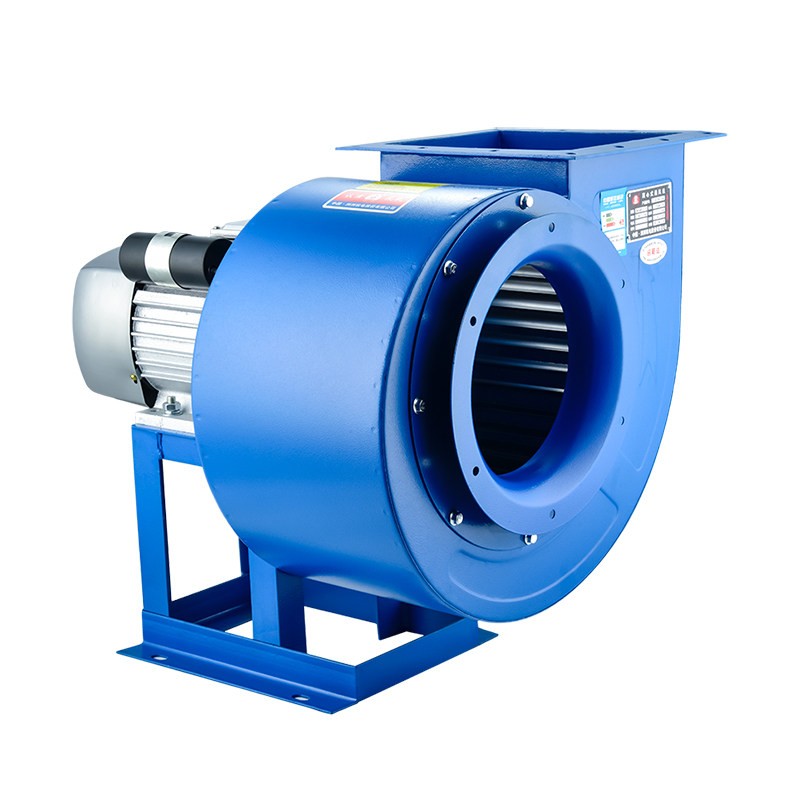
ISO 9001: The Foundational Quality Assurance for Every Centrifugal Blower Manufacturer
How ISO 9001 Certification Ensures Consistent Design, Manufacturing, and After-Sales Support
ISO 9001:2015 does not certify product performance—it validates that a centrifugal blower manufacturer operates a documented, repeatable quality management system. To achieve and maintain certification, the organization must control design inputs, production workflows, inspection points, and corrective actions; retain design review records, calibrated measurement tools, and traceable material lots; and actively monitor supplier quality, internal audit findings, and customer complaints. This discipline reduces dimensional variation, weld defects, and motor-balance issues before shipment. Critically, nonconformances feed directly into root-cause analysis and preventive action—strengthening after-sales support through systemic learning. Buyers gain verifiable evidence of process control across the entire value chain: from quoting and engineering through manufacturing, delivery, and warranty service.
With over one million valid ISO 9001 certificates issued globally as of 2023, the standard remains the industrial benchmark for operational reliability—backed by independent, accredited third-party audits.
Red Flags to Watch For: 'Self-Declared' ISO Compliance vs. Accredited Third-Party Certification
Some suppliers claim “ISO compliant” without holding an accredited certificate—a phrase that merely suggests internal alignment with ISO 9001 principles, not verification. True assurance comes only from certification issued by a body accredited under the International Accreditation Forum (IAF) framework.
Red flags include:
- Missing certificate number or expiry date
- Absence of the accreditation body’s logo
- A scope that excludes centrifugal blowers or fan manufacturing
- Reluctance to share the certificate or surveillance audit reports
Always request the certificate and verify its authenticity via the IAF CertSearch database. Self-declared compliance often reflects unstable documentation, inconsistent corrective action, or insufficiently trained quality personnel—risks that accredited certification is designed to mitigate.
AMCA Certification: Independent Validation of Aerodynamic and Acoustic Performance
Why AMCA 210 (Air) and AMCA 300 (Sound) Are Critical for Specifying Reliable Centrifugal Blower Manufacturer Output
AMCA certification provides independent, third-party validation of aerodynamic and acoustic performance—essential for specifying reliable centrifugal blowers. Air Movement and Control Association International (AMCA) Publication 210 (harmonized as ANSI/AMCA 210/ASHRAE 51) defines standardized laboratory test methods for airflow, pressure, and power, including four installation types (A–D) that reflect real-world ducting configurations. AMCA Publication 300 governs sound testing in qualified acoustic environments. Under the AMCA Certified Ratings Program, manufacturers submit products for testing in approved configurations—and undergo periodic check testing to ensure ongoing accuracy.
Without this verification, cataloged performance curves offer no guarantee of real-world output. In critical applications—HVAC ventilation, industrial cooling, or process air handling—even minor deviations in airflow or noise can compromise system integrity, occupant comfort, or regulatory compliance. The AMCA seal delivers a common, defensible basis for specification, comparison, and post-installation troubleshooting.
The Pitfall of 'AMCA-Compliant': Why Only AMCA-Certified Products Guarantee Verified Performance Data
“AMCA-compliant” is not equivalent to AMCA-certified. It typically indicates a manufacturer’s internal effort to follow test methodology—but without third-party review, challenge testing, or authorization to display the AMCA seal. Only certified products have ratings verified against standardized procedures and subject to periodic retesting. Self-declared compliance may mask inconsistencies in inlet configuration, air density correction, or measurement uncertainty.
For performance-critical applications, insisting on the official AMCA Certified Ratings seal—not just reference to AMCA standards—is the only way to ensure comparability and reduce risk of underperformance. If a supplier cannot produce a current AMCA license or display the seal on certified models, their data lacks independent validation.
CE and UL Markings: Meeting Mandatory Safety and Market Access Requirements
CE Marking (EU) and UL 762 (USA): Distinct Regulatory Pathways Every Centrifugal Blower Manufacturer Must Navigate
Centrifugal blower manufacturers serving global markets must comply with two distinct safety frameworks: CE marking for the European Economic Area and UL 762 certification for North America. CE marking is a mandatory self-declaration under EU directives—including the Machinery Directive and Low Voltage Directive—that affirms conformity with essential health, safety, and environmental requirements. For many standard industrial fans, third-party involvement by a Notified Body is not required.
In contrast, UL 762 is a rigorous, NRTL-led safety standard focused specifically on fire and electrical hazards in power ventilators—including centrifugal blower assemblies used in commercial and industrial ventilation systems. Its evaluation includes construction, thermal performance, motor protection, and enclosure integrity.
CE and UL 762 are not interchangeable: CE enables EU market access; UL 762 supports U.S. and Canadian code acceptance, insurance underwriting, and end-user safety confidence. Buyers should always request the official Declaration of Conformity (for CE) and the UL listing file number (e.g., E123456), then verify both through the EU NANDO database and UL Product iQ.
Energy Efficiency Certifications: ERP, AHRI, and Future-Proofing Your Centrifugal Blower Manufacturer Selection
ERP Directive Stages and AHRI 110 Verification: How They Shape Efficiency, Lifecycle Cost, and Sustainability Claims
Energy efficiency certifications deliver objective, comparable metrics for total cost of ownership—far more reliable than peak-efficiency claims alone. The EU’s Energy-related Products (ERP) Directive advances through staged regulatory thresholds, progressively raising minimum efficiency requirements for fans and motors. This compels manufacturers to document performance at defined operating points—not just best-case conditions—ensuring real-world relevance.
AHRI Standard 110, administered by the Air-Conditioning, Heating, and Refrigeration Institute, provides independent verification of rated airflow, pressure, and power. Its rigorous testing protocol strengthens sustainability claims and supports ESG reporting. A verified 5% efficiency gain can reduce annual electricity costs by hundreds to thousands of dollars over a ten-year service life—typically delivering payback within 2–4 years, per industry lifecycle analyses.
Critically, ERP staging also future-proofs procurement: selecting equipment aligned with upcoming stages avoids premature obsolescence and costly retrofits. Buyers should request ERP stage documentation and AHRI 110 test reports—and evaluate them alongside projected lifecycle cost and Scope 2 emissions impact. This integrated approach transforms efficiency certification from a compliance checkbox into a strategic lever for resilience, savings, and sustainability.
Frequently Asked Questions (FAQ)
Why is ISO 9001 important for centrifugal blower manufacturers?
ISO 9001 ensures the manufacturer maintains a documented, repeatable quality management system, reducing risks such as dimensional variation, weld defects, and motor balance issues.
What should I watch out for when verifying ISO 9001 certification?
Always check for an accredited certification body logo, certificate number, expiry date, and its scope—including centrifugal blower manufacturing.
How does AMCA certification differ from "AMCA-compliant" claims?
AMCA certification involves third-party validation and regular check testing, while "AMCA-compliant" suggests internal adherence to standards without external verification.
Are CE and UL certifications interchangeable?
No, CE certification is for EU market access, whereas UL certification addresses North American safety and regulatory requirements.
What value do ERP and AHRI certifications provide?
These certifications ensure energy efficiency and sustainability, reduce lifecycle costs, and align equipment with future regulatory standards to prevent obsolescence.
Table of Contents
- ISO 9001: The Foundational Quality Assurance for Every Centrifugal Blower Manufacturer
- AMCA Certification: Independent Validation of Aerodynamic and Acoustic Performance
- CE and UL Markings: Meeting Mandatory Safety and Market Access Requirements
- Energy Efficiency Certifications: ERP, AHRI, and Future-Proofing Your Centrifugal Blower Manufacturer Selection
- Frequently Asked Questions (FAQ)