
 EN



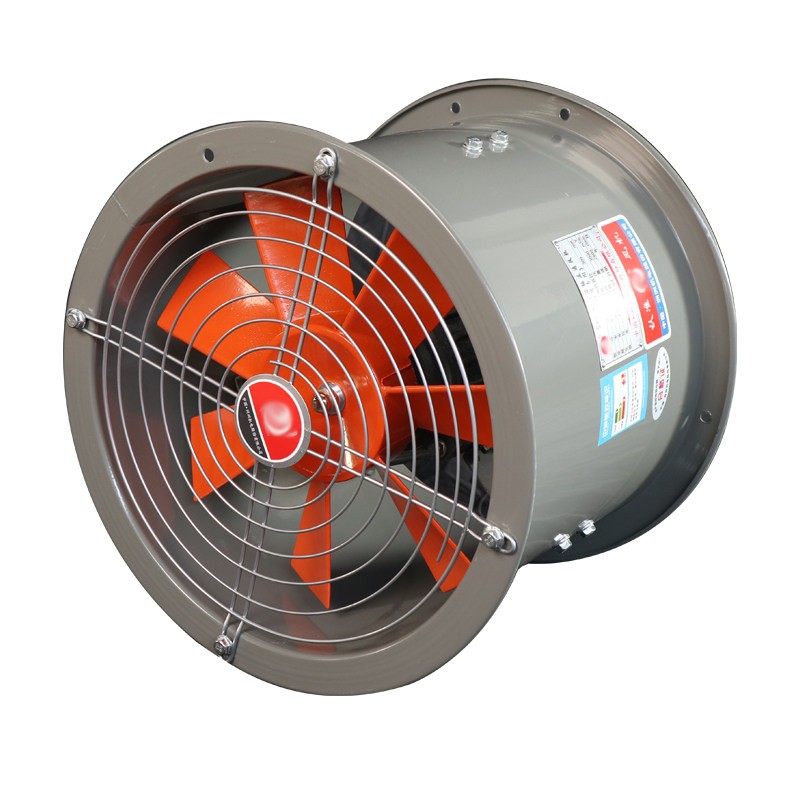
Fewer Parts, Fewer Failures: How Simplified Design Cuts Maintenance at the Source
Why conventional 6 inch extractor fans suffer high failure rates
Most conventional 6 inch extractor fans rely on a web of small, interdependent components: capacitors, terminal blocks, external grilles, backdraft dampers, mounting brackets, multiple screws, and several wiring connections. Each junction introduces a potential failure point. Dust, grease, and moisture accumulate around seams and terminals; motor- and impeller-induced vibration gradually loosens fasteners and strains wiring; plastic clips and thin brackets crack under repeated thermal cycling. A single failed capacitor or worn bearing can take the entire unit offline. Because parts are tightly packed—and often glued or over-engineered—routine cleaning and inspection demand significant disassembly time. Additional failure modes include blocked dampers, corroded terminals, and cracked housings that require full teardown. End buyers face repeated service calls, higher labour costs, and frequent part replacements—even when the motor remains fully functional.
Engineering impact: Modular assembly and reduced part count lower failure points by up to 62%
Simplified 6 inch extractor fans replace this fragmentation with modular construction. A one-piece fan cartridge integrates the impeller, motor, and bearing assembly. Snap-fit housings eliminate many screws and brackets. Integrated backdraft dampers remove separate moving parts. Fewer wiring junctions and sealed terminals reduce corrosion and electrical faults. Engineering analyses—including data from the ASHRAE Handbook: HVAC Applications (2023, Ch. 49) and reliability studies cited in IEEE Transactions on Reliability—confirm that reducing part count can lower failure points by up to 62%. Less complexity also improves tolerance control and shortens assembly time. When replacement is needed, a single cartridge swap replaces what previously required piece-by-piece disassembly. Maintenance becomes predictable, lowering labour, spare parts, and downtime costs. The failure load shifts away from fragile peripheral components and onto fewer, tested, serviceable modules. A leaner bill of materials further reduces inventory overhead and accelerates every service visit—delivering durable, low-maintenance ventilation that protects operating budgets. This design approach cuts maintenance at the source by eliminating failure opportunities before the fan reaches the building.
Long-Life Components: Permanently Lubricated Bearings and Low-Maintenance Materials
Simple-construction extractor fans increasingly avoid oil-impregnated bushings and open ball bearings. Instead, they use sealed components that retain lubricant and exclude contaminants—a small design choice with an outsized effect on lifetime servicing.
The shift from service-dependent ball bearings to sealed sleeve/magnetic bearings in 6 inch extractor fans
Traditional extractor fans often use open ball bearings that require periodic lubrication and degrade rapidly in dusty, humid, or thermally variable environments. In contrast, leading simplified 6 inch models now employ factory-sealed sleeve bearings or magnetically levitated rotors. These are permanently lubricated, require no end-user greasing, and feature sealed housings that block particle ingress—reducing abrasive wear on shafts and end caps. Without exposed lubricant films, fewer contaminants adhere to rotating surfaces. The result is a cleaner, quieter fan that avoids the most common mechanical failure mode: dry or contaminated bearings. This shift transforms maintenance from a recurring task into a rare event—backed by ISO 281 bearing life calculations and field validation from the UK’s Building Research Establishment (BRE Report BR 451, 2022).
How >30,000-hour bearing life translates to measurable lifetime cost reduction for end buyers
A bearing rated for more than 30,000 hours supports continuous operation for roughly 3.5 years—or, at eight hours per day, approaches ten years of typical bathroom or utility-room use. For end buyers, this eliminates early bearing replacement, re-lubrication, and associated labour. A single avoided service call typically saves $80–$150; commercial maintenance contracts may exceed $200 per visit. Sealed bearings also maintain consistent friction profiles, helping energy use remain stable over time. As a result, higher initial component quality delivers clear ROI through lower total maintenance cost, less downtime, and fewer replacement parts—without compromising performance.
Service-Friendly Access: Tool-Free Maintenance and Cleaning in Simple-Construction 6 Inch Extractor Fans
Design features enabling rapid cleaning and inspection: snap-fit housing, tool-free grille, and blade accessibility
Simple-construction 6 inch extractor fans remove routine servicing barriers with snap-fit housings, tool-free grilles, and direct blade access. Users release the outer grille by hand, wipe dust from blades and impeller surfaces, and reattach the cover in under a minute—no screwdrivers required, no risk of stripped fasteners. Snap-fit panels also reduce improper reassembly and lost hardware. Tool-free access shortens inspection cycles, enabling maintenance staff to check for dust accumulation, seal degradation, or loose connections without calling a technician. For occupied homes and rental properties, this lowers the skill threshold for cleaning, encourages more frequent upkeep, and helps prevent airflow loss due to dirt buildup. The result is a fan that stays balanced, quieter, and closer to rated CFM between professional service intervals—extending real-world performance and reducing long-term operational risk.
Total Cost of Ownership: Why Simplicity Improves Both Efficiency and Maintainability
Debunking the efficiency trade-off: ASHRAE RP-1789 data confirms comparable CFM/Watt in simplified 6 inch extractor fans
A common assumption is that simplifying a 6 inch extractor fan must sacrifice airflow performance. ASHRAE RP-1789 fan performance data refutes this: well-designed axial fans in this class deliver comparable CFM/Watt to more complex units under standard 0.1 in. w.g. static pressure. Smooth inlet geometry, integrated backdraft dampers, and reduced internal leakage compensate for fewer components. Fewer moving parts also mean less friction and alignment drift—so efficiency remains stable over time. For end buyers, this means lower electricity costs and fewer service interventions. Total cost of ownership improves because maintenance labour, replacement parts, and downtime all fall while airflow performance stays competitive. In practice, specifying a simple-construction 6 inch extractor fan does not force a trade-off between efficiency and maintainability. Buyers can therefore prioritise simplicity for reliability—without accepting weaker ventilation or higher energy bills.
Frequently Asked Questions (FAQ)
Why do conventional 6 inch extractor fans have higher failure rates?
Conventional fans rely on numerous interdependent parts that increase potential failure points. Vibrations, dust buildup, and corrosion in these parts lead to maintenance challenges and operational failures.
How does modular assembly reduce failure in extractor fans?
Modular extractor fans integrate components into fewer assemblies, eliminating numerous screws and brackets, while reducing electrical faults and enhancing serviceability. This approach lowers failure points by up to 62%.
What types of bearings are used in simplified extractor fans?
Simplified extractor fans use sealed sleeve bearings or magnetically levitated rotors that are permanently lubricated and contaminate-resistant, avoiding common issues like dry bearings.
How long do the bearings in these fans last?
With a lifetime exceeding 30,000 operational hours, the bearings can support typical usage for nearly 10 years without needing replacements or lubrication.
Does simplifying fan design compromise efficiency?
No, simplified fans maintain competitive airflow performance (CFM/Watt) without sacrificing efficiency, thanks to smoother geometries and reduced frictional losses.
Table of Contents
- Fewer Parts, Fewer Failures: How Simplified Design Cuts Maintenance at the Source
- Long-Life Components: Permanently Lubricated Bearings and Low-Maintenance Materials
- Service-Friendly Access: Tool-Free Maintenance and Cleaning in Simple-Construction 6 Inch Extractor Fans
- Total Cost of Ownership: Why Simplicity Improves Both Efficiency and Maintainability
- Frequently Asked Questions (FAQ)